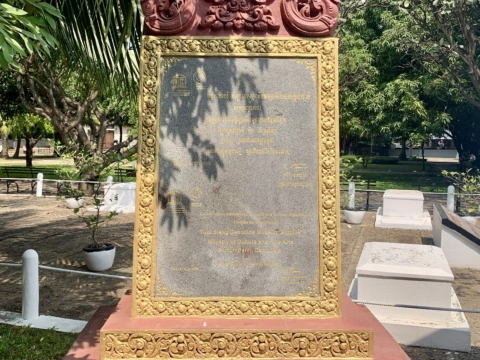
Learn about the museum's history as the former S-21 Prison in Phnom Penh, Cambodia. Warning: Graphic images.
In 1975, the communist movement known as the Khmer Rouge captured Phnom Penh after years of civil war. The new regime, led by Pol Pot, sought to transform Cambodia into a self-sufficient agrarian society. Shortly after taking power, it converted Tuol Svay Prey High School into Security Prison 21 (S-21), the regime's most infamous prison. Today, it is known as the Tuol Sleng Genocide Museum, preserving much of the site as it was found after the regime fell. Each building in the compound serves as an important historical record rather than a conventional museum gallery.
What Happened Inside S-21
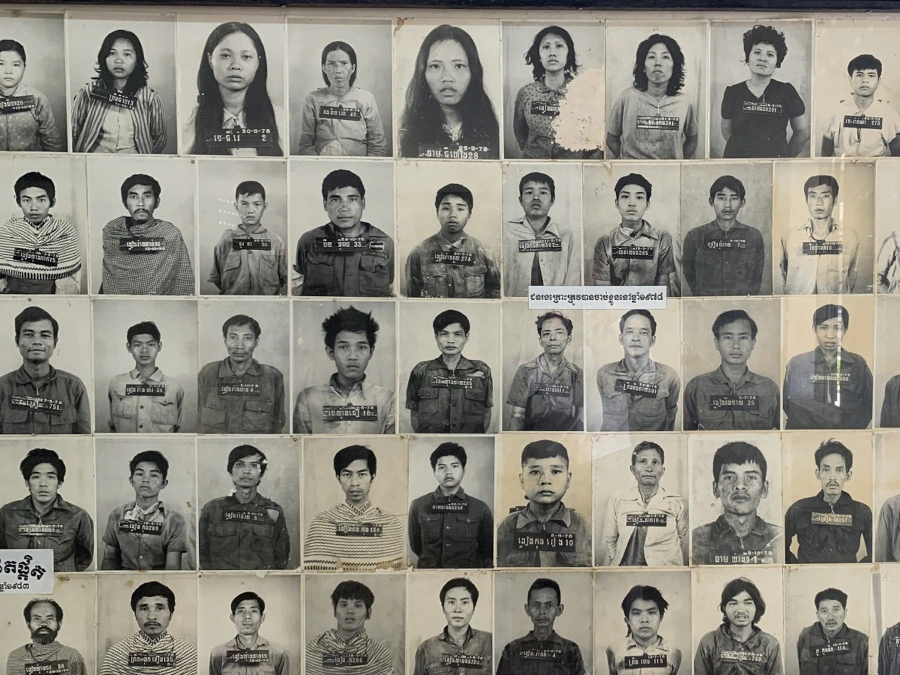
Prisoner mugshots on display in Building B. Photo: Lord Acuña
S-21 primarily served as an interrogation and detention centre. Most people sent there had already been accused of being “enemies” of the regime, including former government officials, soldiers, teachers, Buddhist monks, and others. While many prisoners were innocent, authorities arrested them simply because someone else had implicated them during interrogation.
Inside, each person was photographed, assigned an identification number, and forced to provide a detailed biography. Interrogators then tortured them until they signed confessions. Prisoners were accused of participating in elaborate conspiracies, many of which were fabricated. Under severe physical and psychological abuse, many victims named other supposed conspirators, leading to further arrests.
An estimated 18,000 people passed through S-21 between 1975 and 1979, including adults and children, many of whom were accused without evidence or targeted because of their family connections. Only a handful survived, with around 12 adults generally recognised as survivors. Many were artists and skilled workers whose abilities the prison administration considered useful.
The Fall of the Khmer Rouge
In late 1978, the People's Army of Vietnam launched an invasion of Cambodia following years of rising tensions between the two countries. The Khmer Rouge fought back, but Vietnamese forces quickly advanced into Cambodian territory. By January 1979, they captured Phnom Penh, forcing the regime's leadership to flee westward towards the Thai border.
Upon entering S-21, Vietnamese forces found the prison largely abandoned, with only a few recently killed victims remaining inside. Their discovery revealed the horrors of the site and led to the preservation of the former prison as evidence of the Khmer Rouge regime's crimes.
Becoming the Tuol Sleng Genocide Museum
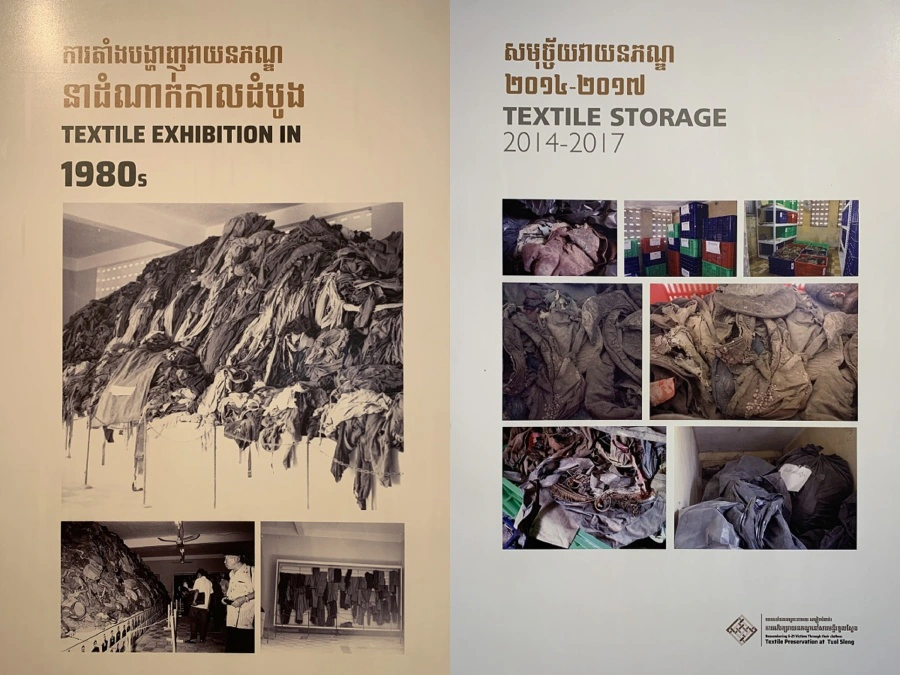
The recovered clothing of the victims. Photo: Lord Acuña
During the Khmer Rouge's rule, an estimated 1.5 to 2 million people died from execution, forced labour, starvation, and disease. Soon after its collapse, the former S-21 prison was transformed into the Tuol Sleng Genocide Museum. Rather than restoring it, authorities left many rooms much as they had been found. Today, the museum documents not only the operation of S-21 but also the wider impact of the former regime on Cambodia.
Over the years, international partners have helped protect the museum and strengthen its educational mission. Countries such as France, Japan, Germany, and the United States have contributed to these efforts, ensuring the site remains accessible for future generations.
The Main Buildings
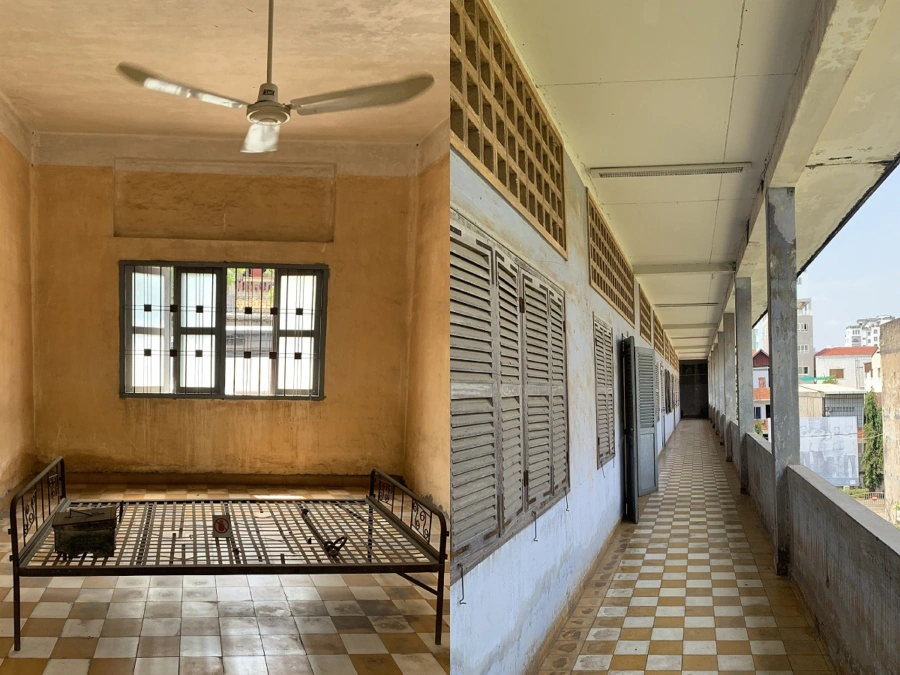
(L) A metal bed frame in one of the prison cells. (R) Walking through the corridor. Photo: Lord Acuña
Most visitors spend 2–4 hours exploring the museum's buildings. For more historical context, survivor testimony, and detailed explanations, an audio guide is highly recommended. The site is intentionally presented as a place of remembrance, with many rooms remaining minimally altered.
Building A
Building A contains some of the largest classrooms, which the Khmer Rouge converted into rooms for questioning and torture. Several of them still contain the metal bed frames where prisoners were shackled. Black-and-white photographs taken by Vietnamese forces in January 1979 show the victims as they were found inside these rooms. Paintings by survivor Vann Nath are also on display, helping visitors understand what happened in these spaces.
Building B
Building B contains thousands of prisoner mugshots lining the walls from floor to ceiling, showing victims when they first arrived at S-21. The building also contains exhibits about the prison's administration, staff, and those imprisoned there, focusing on documentation and remembrance.
Building C
Building C is among the most striking because many of its tiny individual cells, made of brick or wood, remain intact and offer a glimpse into the conditions prisoners endured. The building's exterior walkways feature barbed wire barriers installed by the Khmer Rouge to prevent detainees from attempting to jump from the upper floors.
Building D
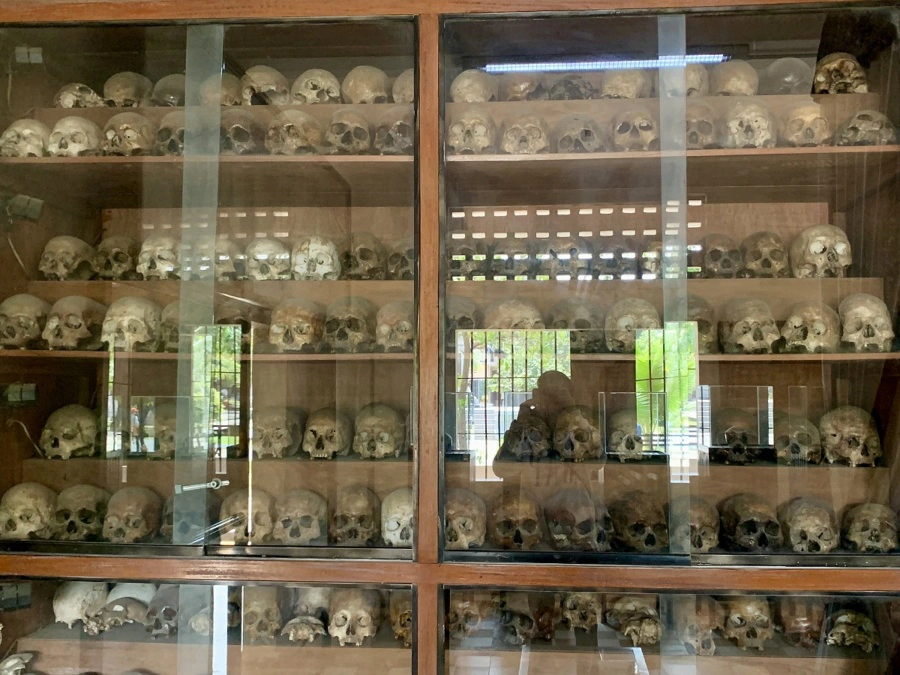
The skulls of the victims inside Building D. Photo: Lord Acuña
Building D contains exhibits explaining the broader history of the Khmer Rouge regime and S-21. Displays include human skulls and bones recovered from victims, shackles, torture instruments, and historical documents. Meanwhile, more paintings by Vann Nath depict prison life and the abuse suffered by prisoners. Some floors also host temporary exhibitions, educational displays, and a meditation space known as the White Lotus Room.
Courtyard
The open courtyard between the buildings serves as an important memorial. Here, you can find fourteen white graves of victims whose bodies Vietnamese forces discovered at S-21 in January 1979. The grounds retain the atmosphere of the former school, highlighting the transformation of an ordinary educational campus into a prison.
Building E
Building E is a newer wooden structure that serves educational rather than historical purposes. The museum screens documentary films throughout the week, while testimony programs feature stories from survivors and others affected by the Khmer Rouge era. It also has a reading room for researchers and visitors interested in Cambodia's modern history.
Bou Meng: An S-21 Survivor
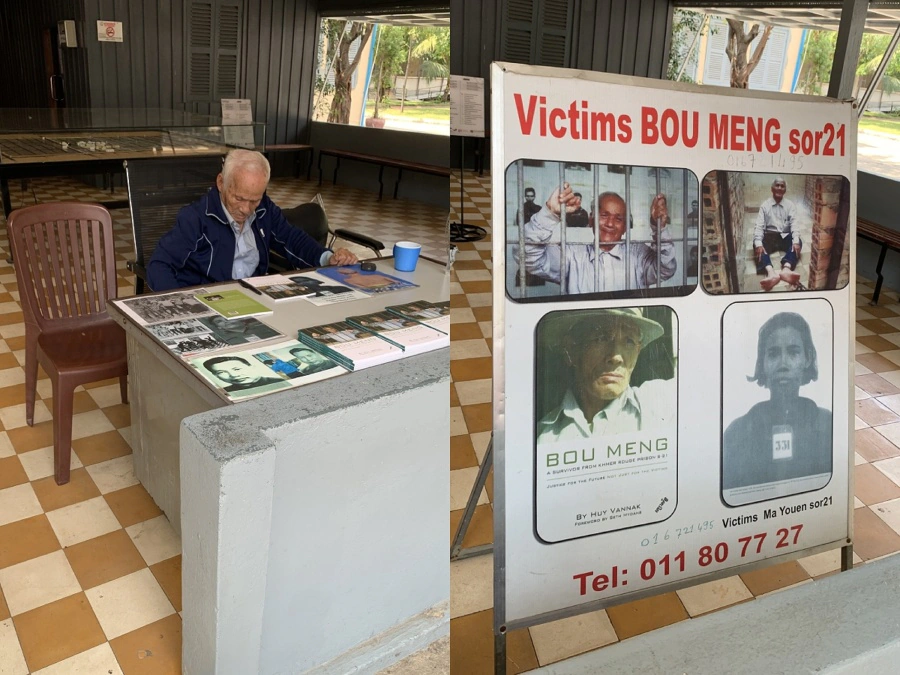
Photo: Lord Acuña
Bou Meng is one of the few known adult survivors of S-21 and an important witness to the crimes committed there. While his wife did not survive, he escaped execution because of his skills as a painter. His testimony helped document the conditions and treatment prisoners endured inside S-21. It also revealed how some detainees survived because the prison valued certain skills they possessed.
For many years, visitors occasionally saw Bou Meng at the museum, where he would sign copies of his memoir and speak with guests. I was fortunate enough to spot him during my visit to the Tuol Sleng Genocide Museum. However, as he has grown older, these appearances have become less frequent, so there is no guarantee he will be there on any given day.
My Visit to Tuol Sleng
Visiting the Tuol Sleng Genocide Museum was eye-opening, as I learned about the atrocities committed against Cambodians by the Khmer Rouge. Seeing the original metal bed frames in the prison cells and walking through the corridors was haunting. Entering Building D made the experience even heavier, as the skulls and other bones of the victims were on display. Despite the heartbreaking history, knowing that my visit supported the museum's preservation and educational mission provided some small consolation.
Tuol Sleng Genocide Museum
Location: St.113, Boeung Keng Kang III, Phnom Penh, Cambodia
Operating hours: 08:00 – 17:00 daily
Cost: From USD 19
Comments
Be the first to comment!