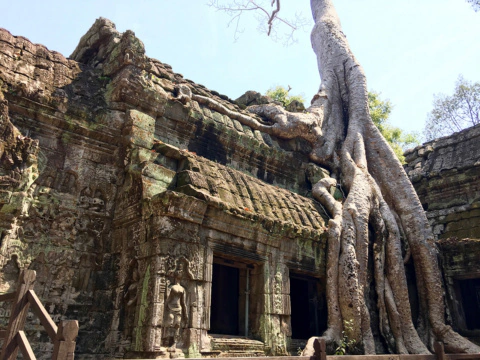
Explore Angkor Wat and the other temples of the Angkor Archaeological Park in Siem Reap, Cambodia, with this guide.
Angkor Wat is easily the most famous attraction in the Kingdom of Cambodia. So much so that it even appears on the country's national flag. But what many visitors don't realise is that it's just one temple within the vast Angkor Archaeological Park, a UNESCO World Heritage Site. Spread across the jungles of Siem Reap, the park is home to dozens of ancient temples, making it one of the world's most significant cultural heritage sites.
Angkor Archaeological Park Quick Facts
Location: Siem Reap, Cambodia
Construction: Between 9th and 13th centuries
Built by: Khmer Empire
Size: 400+ km²
Types of Angkor Tours
There are two main routes around the Angkor Archaeological Park: the Small Circuit and the Grand Circuit.
The Small Circuit covers around 17 km and includes several of the park's most iconic temples. This is the route I chose, and it's ideal if you only have one day to explore. Meanwhile, the Grand Circuit covers around 26 km and is for visitors with two or more days. It essentially extends the Small Circuit, taking you to additional temples and monuments while showcasing a wider variety of Khmer architecture.
Angkor Wat
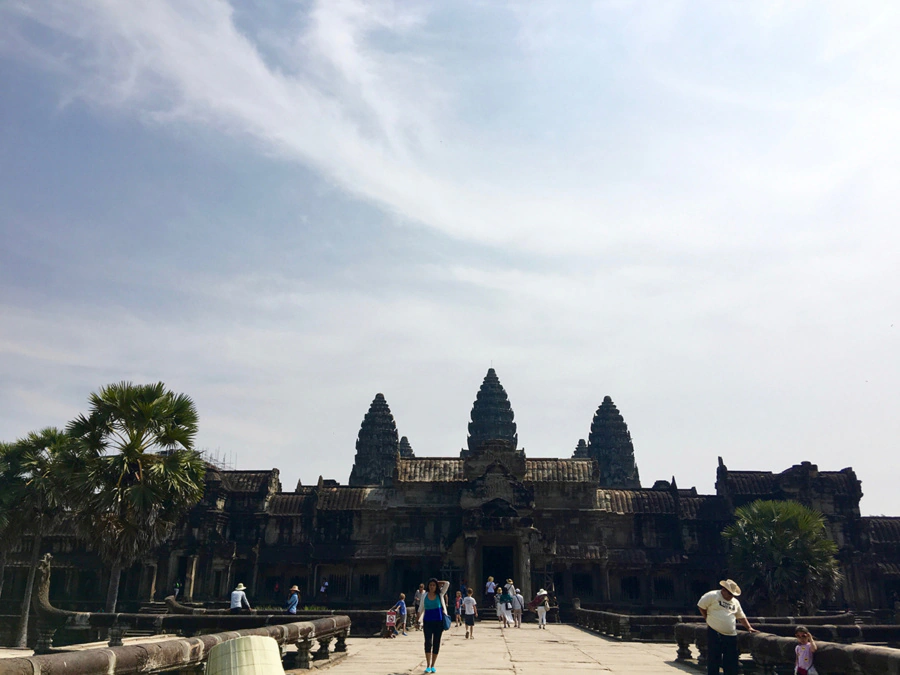
Entering Angkor Wat. Photo: Lord Acuña
The largest and best-preserved temple within the Angkor Archaeological Park is Angkor Wat. It took me about an hour to explore this temple alone, giving you an idea of its sheer scale. Originally built as a Hindu temple dedicated to Vishnu, it gradually became a Buddhist temple, which it remains today.

Just look at the scale of Angkor Wat Temple!
Architecturally, Angkor Wat is renowned for its grand scale, remarkable symmetry, and intricate stone carvings. Covered in detailed bas-reliefs, its walls depict scenes from the Ramayana and Mahabharata, as well as historical battles and celestial beings.
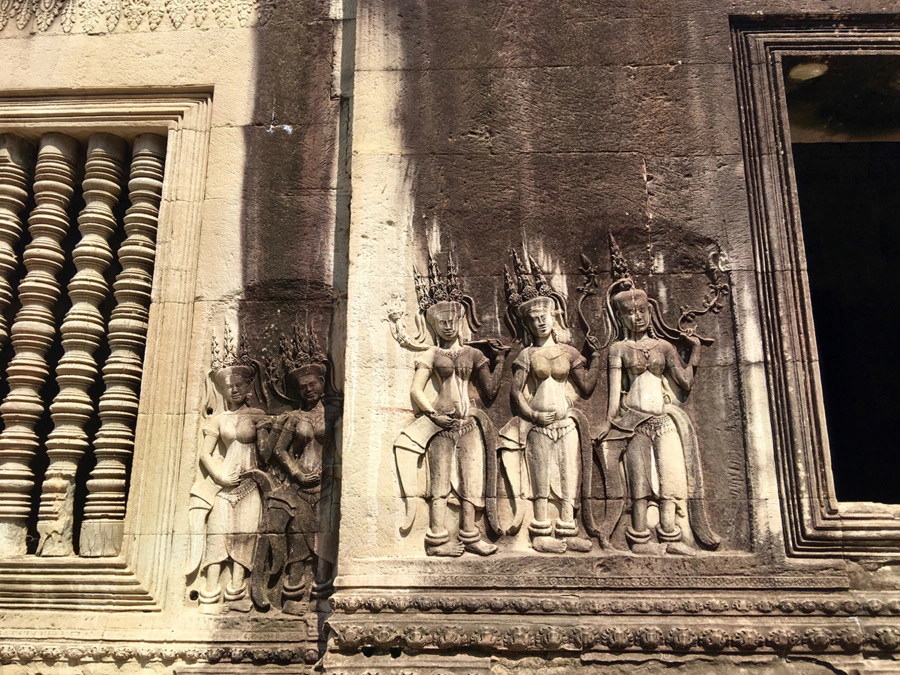
Impressive wall carvings at Angkor Wat. Photo: Lord Acuña
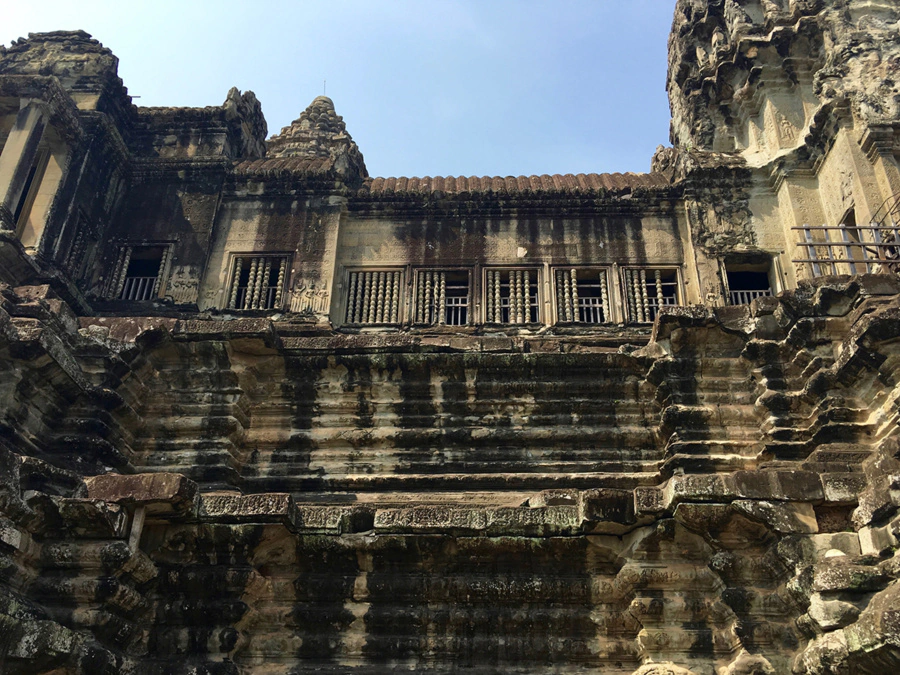
Photo: Lord Acuña

Spent about an hour at Angkor Wat. Photo: Lord Acuña
Prasat Kravan
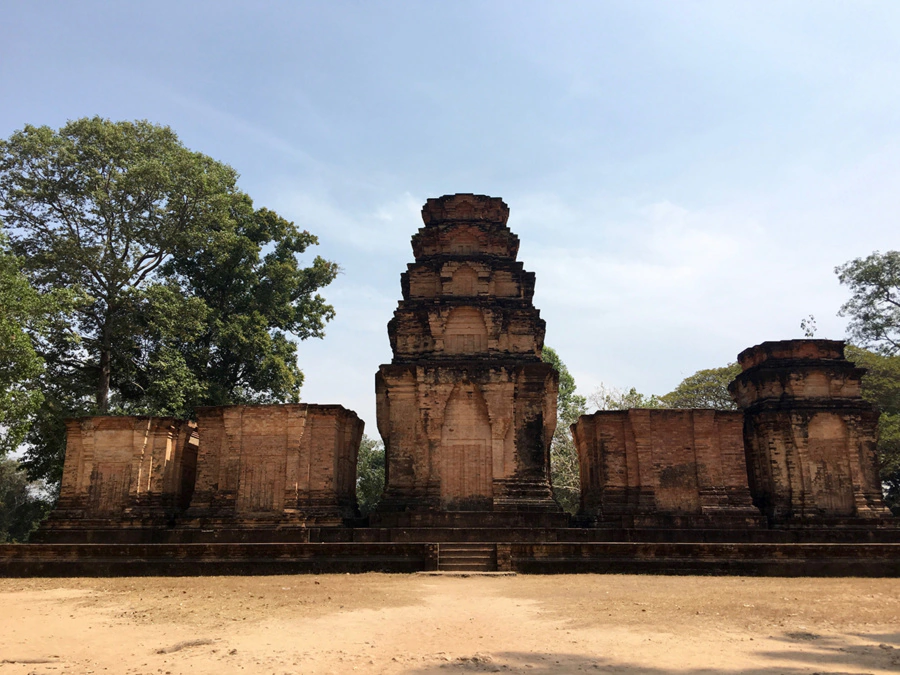
Prasat Kravan within the Angkor Archaeological Park. Photo: Lord Acuña
Built in 921 CE during the reign of Harshavarman I, Prasat Kravan is a small but historically significant Hindu temple within the Angkor Archaeological Park. It was dedicated to the Hindu god Vishnu and is best known for its rare brick bas-reliefs, considered masterpieces of early Khmer art.
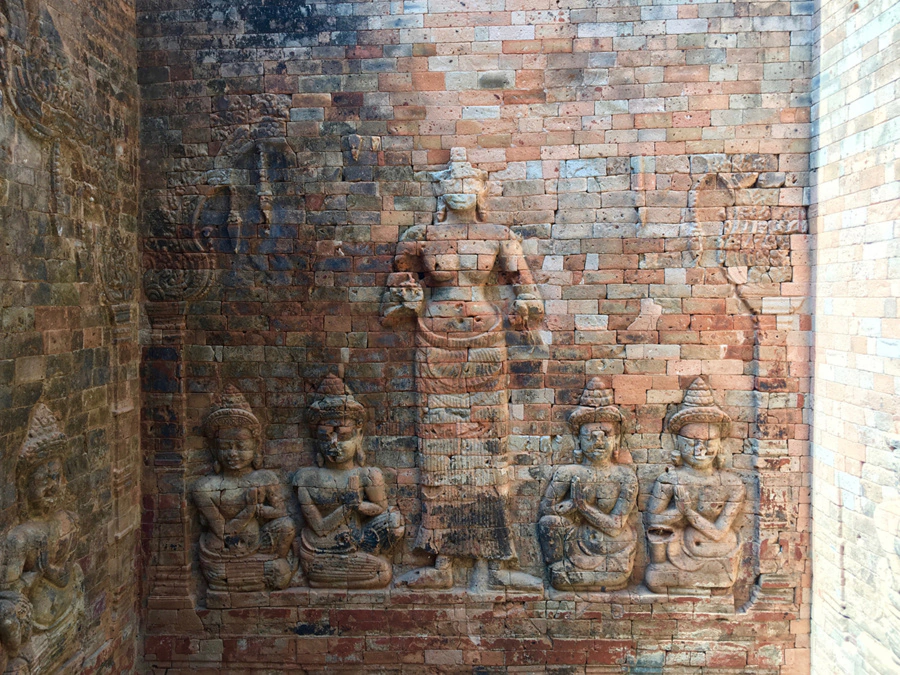
The rare brick bas-reliefs at Prasat Kravan. Photo: Lord Acuña
Banteay Kdei

Visiting Banteay Kdei Temple. Photo: Lord Acuña
Banteay Kdei is a large Buddhist temple within the Angkor Archaeological Park, built in the late 12th to early 13th century during the reign of Jayavarman VII, one of the Khmer Empire's most prolific builders. Its name means "Citadel of Chambers", referring to its many interconnected rooms and passageways. Compared with Angkor's most famous temples, Banteay Kdei is often much quieter, making it an excellent place to appreciate Khmer architecture and explore its atmospheric ruins without the largest crowds.

Photo: Lord Acuña
Ta Prohm
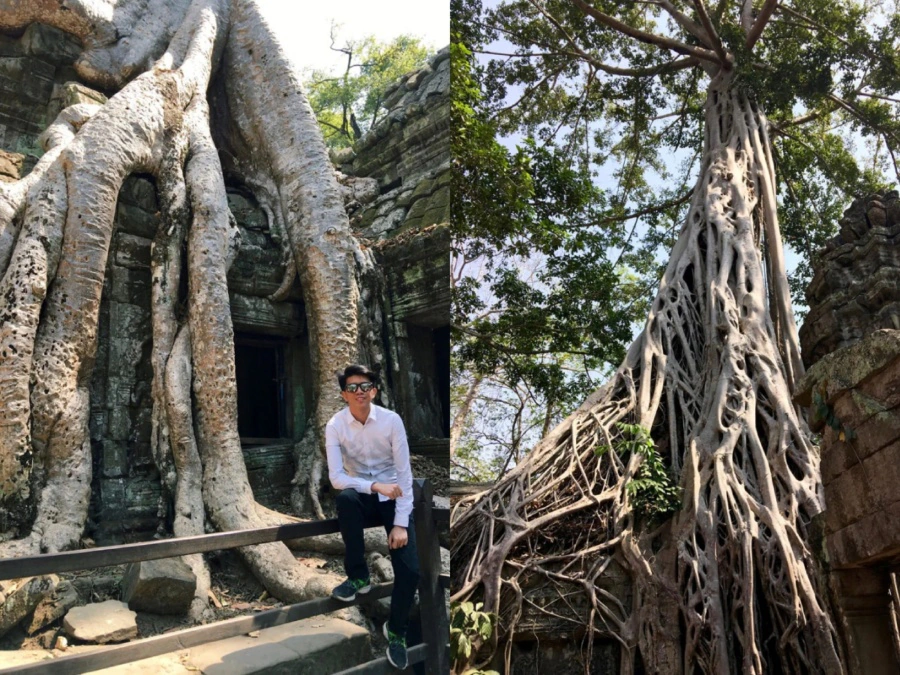
Ta Prohm was featured in the 2001 film Tomb Raider. Photo: Lord Acuña
Ta Prohm is one of the most famous temples in the Angkor Archaeological Park. It gained international recognition after appearing in the 2001 film Tomb Raider, starring Angelina Jolie. Known for its giant tree roots entwined with ancient stone ruins, Ta Prohm still retains much of its original jungle-covered state. Conservation teams continue its restoration in collaboration with India.
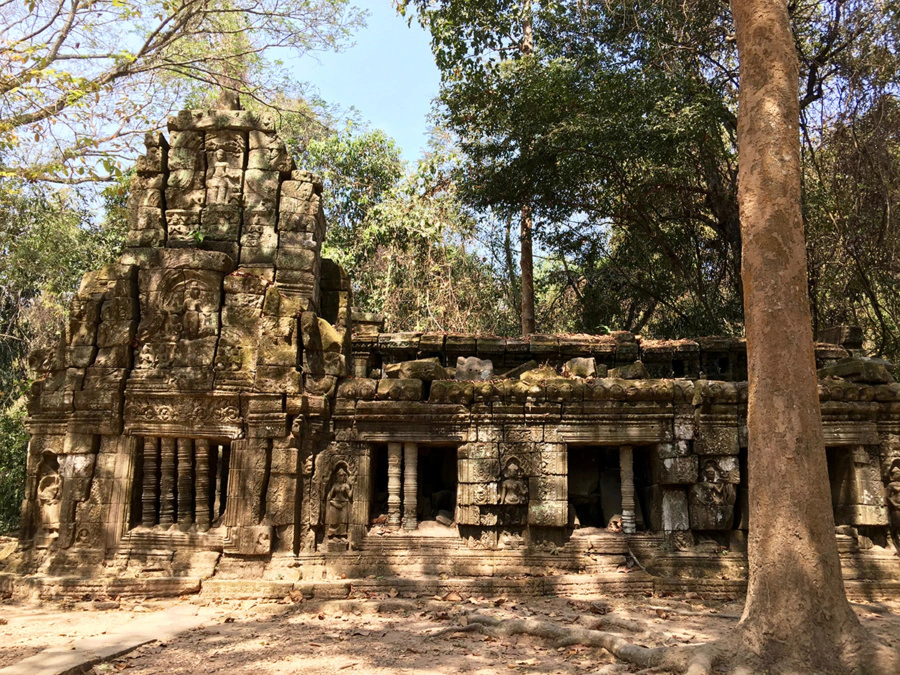
Photo: Lord Acuña
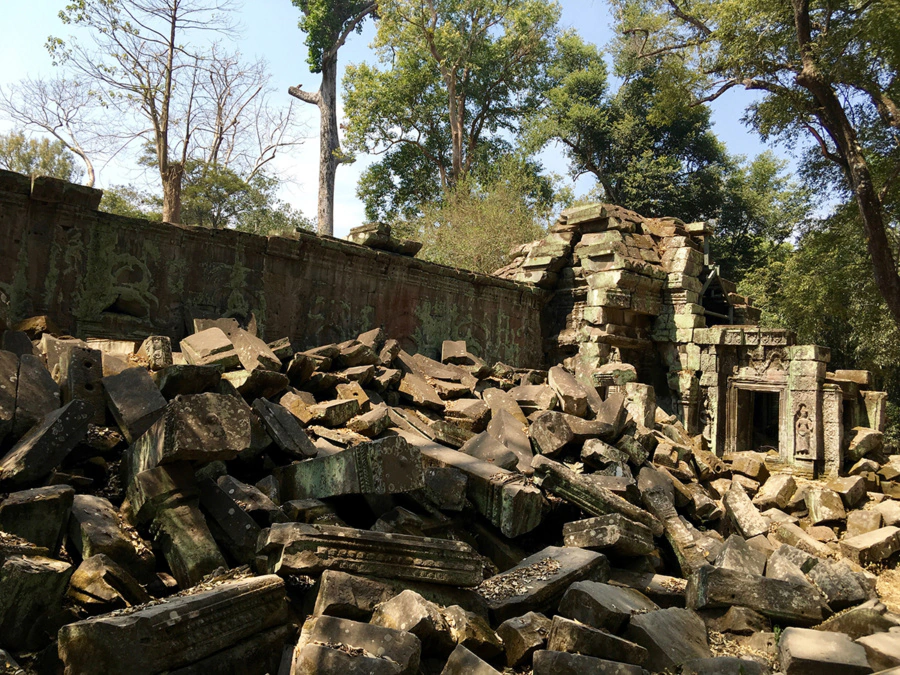
Lara Croft, are you there? Photo: Lord Acuña
Ta Keo

Making my way up Ta Keo Temple. Photo: Lord Acuña
Ta Keo is one of the tallest temples in the Angkor Archaeological Park, known for its towering, pyramid-like design. Reaching the summit requires climbing narrow, steep stone steps. I made it all the way to the top, and the views were worth it – but be sure to use extra caution, as the steps can be quite challenging.

Photo: Lord Acuña
Chau Say Tevoda and Thommanon

Chau Say Tevoda Photo: Lord Acuña
Chau Say Tevoda and Thommanon are two small, well-preserved Hindu temples that stand opposite each other within the Angkor Archaeological Park. Often visited together, their elegant sandstone carvings and similar architectural style make them an interesting stop between the park's larger temple complexes.

Photo: Lord Acuña

Thommanon Temple Photo: Lord Acuña
Angkor Thom
Angkor Thom is a walled city within the Angkor Archaeological Park that served as the royal capital of the Khmer Empire. Surrounded by towering walls and a wide moat, it was the empire's political, religious, and cultural centre. Covering around 9 km2, I spent most of my day exploring this remarkable ancient city.
Today, Angkor Thom remains one of the most impressive and best-preserved ancient cities in Southeast Asia. Within its walls are several of the park's most important monuments, including:
1. Bayon

The smiling giant stone faces at Bayon Temple. Photo: Lord Acuña
What makes Bayon especially famous are its more than 200 giant stone faces carved into the temple's towers. Many believe they represent either the Bodhisattva of Compassion (Avalokiteshvara), King Jayavarman VII himself, or a combination of both. The calm, gently smiling faces give the temple a mysterious yet peaceful atmosphere.

There are over 200 of these. Photo: Lord Acuña

Photo: Lord Acuña
2. Baphoun
Baphuon Temple in Angkor Thom. Photo: Lord Acuña

Baphuon Temple in Angkor Thom. Photo: Lord Acuña
Baphuon is an 11th-century temple mountain that was originally built as a Hindu temple dedicated to Shiva. It stands on a steep, pyramid-like structure leading to a central tower. One of its most fascinating features is the massive reclining Buddha at the rear of the temple, carefully formed using the temple's own stone structure. This later addition reflects Baphuon's transformation from a Hindu to a Buddhist place of worship.

Photo: Lord Acuña
This was definitely one of my favourites in Angkor as its dramatic entrance instantly reminded me of the video game Temple Run. From the upper platform, you'll also be rewarded with beautiful panoramic views of the surrounding forest and ancient ruins.

Doesn't this remind you of the video game Temple Run? Photo: Lord Acuña
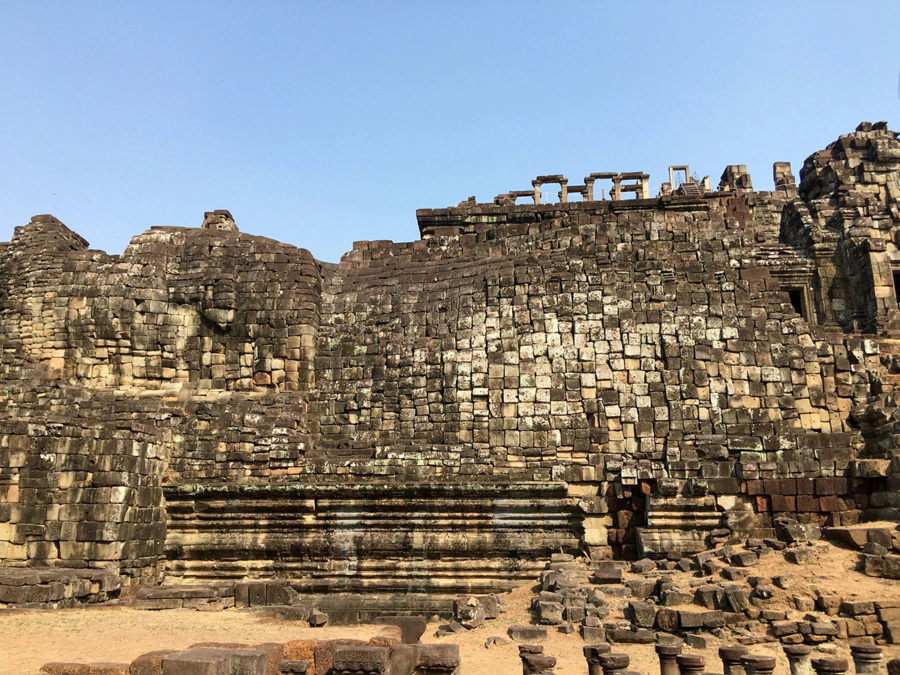
Photo: Lord Acuña
3. Phimeanakas

Phimeanakas is a three-tiered pyramid temple within Angkor Thom. Photo: Lord Acuña
Phimeanakas is a small temple-mountain built in the shape of a three-tiered pyramid. According to legend, the king was believed to climb to its summit every night to meet a mythical serpent spirit, or naga, who appeared in the form of a woman. Today, its weathered laterite and sandstone terraces stand as quiet reminders of Angkor's royal past.
4. Terrace of the Leper King

Some of the most interesting stone carvings are at the Terrace of the Leper King. Photo: Lord Acuña
Another favourite of mine, the Terrace of the Leper King is an elaborately carved stone platform whose true purpose remains uncertain. It features intricate double-layered carvings of mythological beings, demons, and nagas hidden along its narrow walls. The terrace takes its name from a weathered statue that locals associated with the "Leper King". The original statue currently sits in the National Museum in Phnom Penh, while a replica stands at the site.
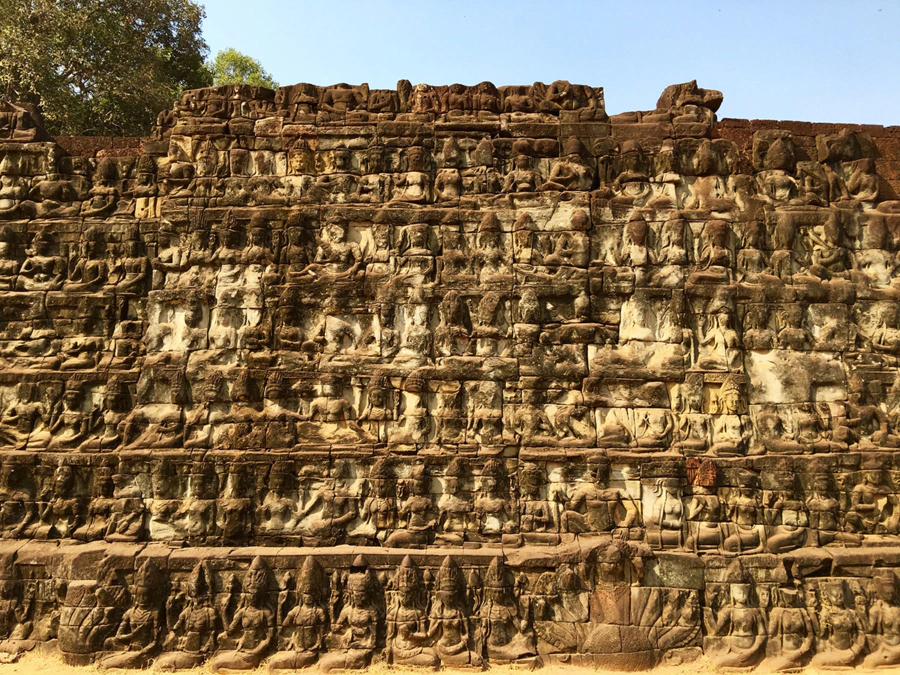
Photo: Lord Acuña
5. Preah Palilay

A quiet moment at Preah Palilay. Photo: Lord Acuña
Preah Palilay is a quiet Buddhist temple tucked away within Angkor Thom. Unlike the grander monuments nearby, it is smaller and far less visited, which gives it a calm, secluded feel. It is best known for its elegant sandstone gateway and the large trees that have grown around and through the ruins, creating an atmospheric jungle setting.
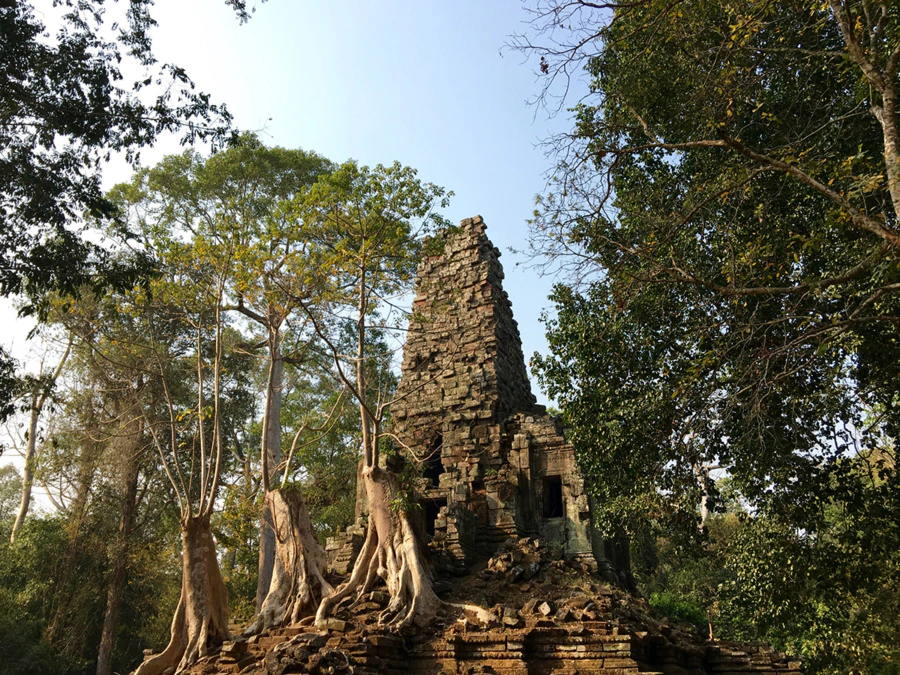
Photo: Lord Acuña
Sunset at Phnom Bakheng

Arrived a little too late for the sunset at Phnom Bakheng. Photo: Lord Acuña
Many visitors end their day at Phnom Bakheng, one of the most popular sunset viewpoints in the Angkor Archaeological Park. Be prepared for a short uphill walk and large crowds, especially during peak season. I arrived at around 05:00 PM thinking I had plenty of time, but by the time I reached the summit, I had already missed the best sunset colours.
If watching the sunset here is high on your list, arrive early to improve your chances of getting a good viewing spot. Alternatively, many visitors prefer watching the sunrise at Angkor Wat for a more iconic experience.
Angkor Small Circuit Tour
Cost: USD 65 (up to 4 people)
Duration: 9 hours
Includes: Hotel pick-up
Comments
Ganda ng mga views na kuha mo kuya!