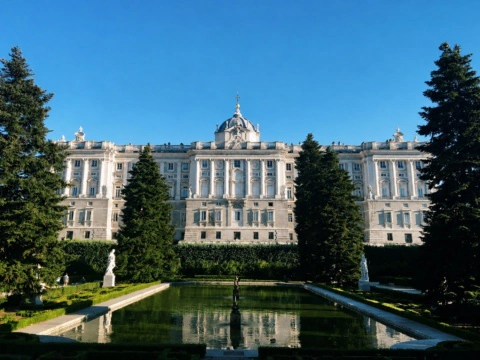
¡Bienvenidos a Madrid! Explore Spain's capital and political centre, packed with history, culture, and great food.
Madrid is the capital and largest city of Spain. Located on a plateau around 650 metres above sea level, it is also Europe's highest capital city. Its central location makes it well-connected to other major Spanish cities by road, rail, and air. With a metropolitan population of more than 6 million people, it is the country's political, cultural, and economic hub.
Visiting the capital city of España soon? This guide covers ways to get around Madrid, as well as plenty of things to do suitable for every type of traveller.
Madrid Overview
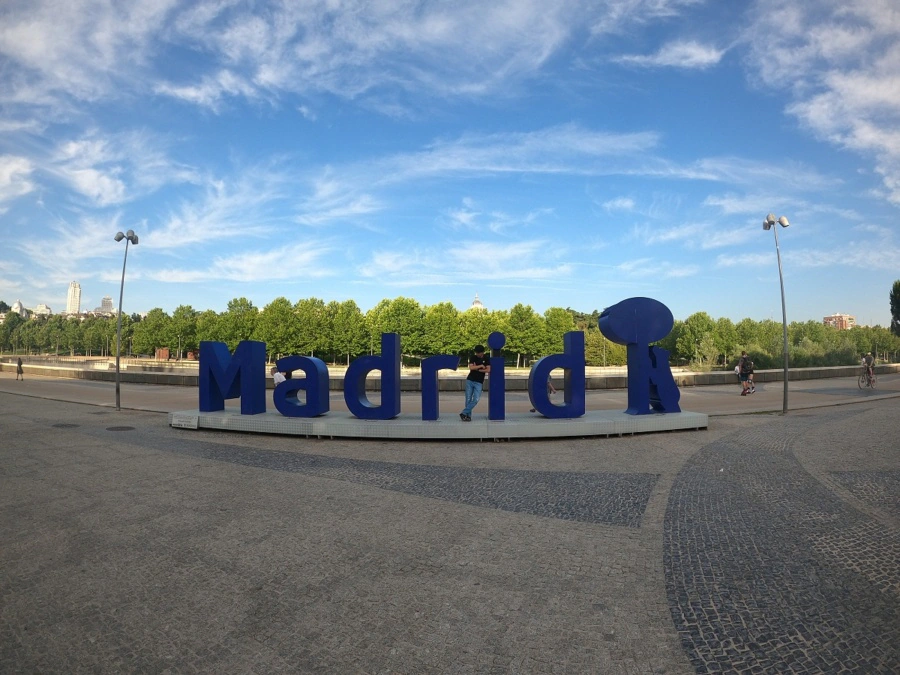
The Madrid sign, made from recycled glass, at Madrid Río Park.
Country: Spain
Country Code: +34
Continent: Europe
Timezone: GMT+1
Currency: Euro
Airport: Adolfo Suárez Madrid–Barajas Airport (MAD)
Language: Spanish, English
Getting Around Madrid
Before heading out to explore, let's look at the ways to get around the city. Madrid has one of the best public transport systems in Europe, so you can easily explore the city without renting a car. Most visitors can reach major attractions quickly using public transport. Here are the best ways to get around the capital of Spain.
1. By Metro
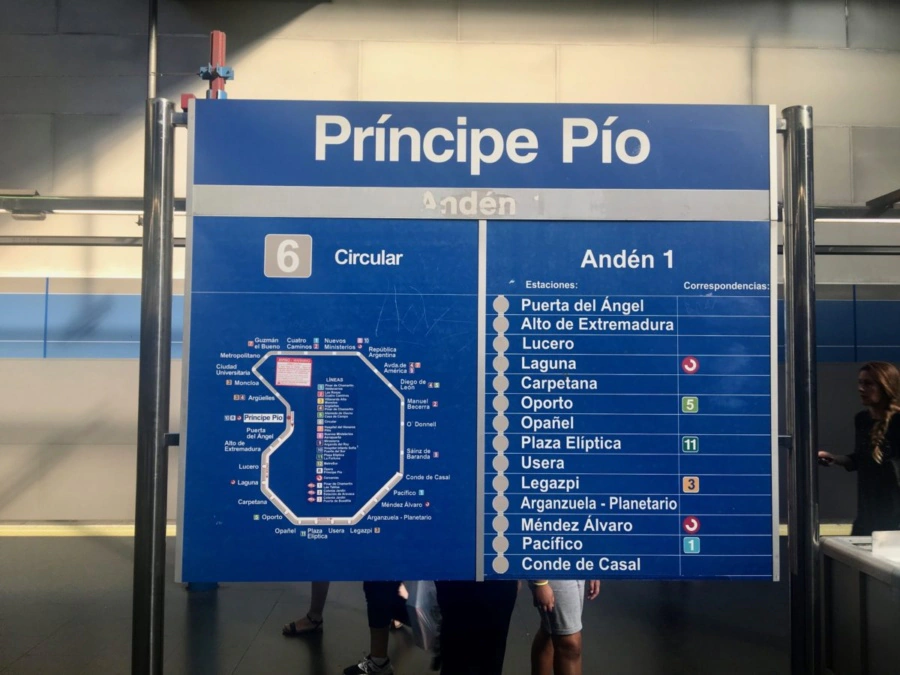
Arrived at Príncipe Pío Station. Photo: Lord Acuña
The Metro de Madrid is usually the fastest way to get around the city. It has more than 300 stations serving Madrid and its surrounding suburbs. The operating hours are generally from 06:00 AM to 01:30 AM, although they may vary slightly by station. You can travel using a transport card, contactless bank card (on supported services), or single and multi-journey tickets.
2. By Bus
The Empresa Municipal de Transportes de Madrid (EMT Madrid) operates an extensive bus network throughout the city. It's especially useful for reaching areas not directly served by the Metro. If you're out after the Metro closes, you can use the búhos (night buses), which run throughout the night on selected routes.
3. By Taxi or Ride-hailing
Official Madrid taxis are easy to spot with their white colour and distinctive red diagonal stripe. You can also book a ride using apps such as Uber, Bolt, or Cabify. In general, taxis are reliable, and trips to and from the airport are charged at a fixed fare, so that's one less thing to worry about.
4. By Bike or Scooter
If you'd rather explore at your own pace, Madrid has a public bike-sharing system called BiciMAD. Also widely available are electric scooters throughout the city, although operators and local regulations can change from time to time.
5. By Walking
If all else fails, simply walk. Madrid's city centre is surprisingly walkable, and many of the main attractions are just a short stroll from one another. In many cases, you'll get there faster on foot than by car or public transport.
Best Things to See and Do in Madrid
For first-time visitors, these must-visit attractions are a great way to get to know Madrid. From iconic landmarks to unique attractions, these highlights deserve a spot on your itinerary.
1. Palacio Real
Nearest Metro station: Ópera
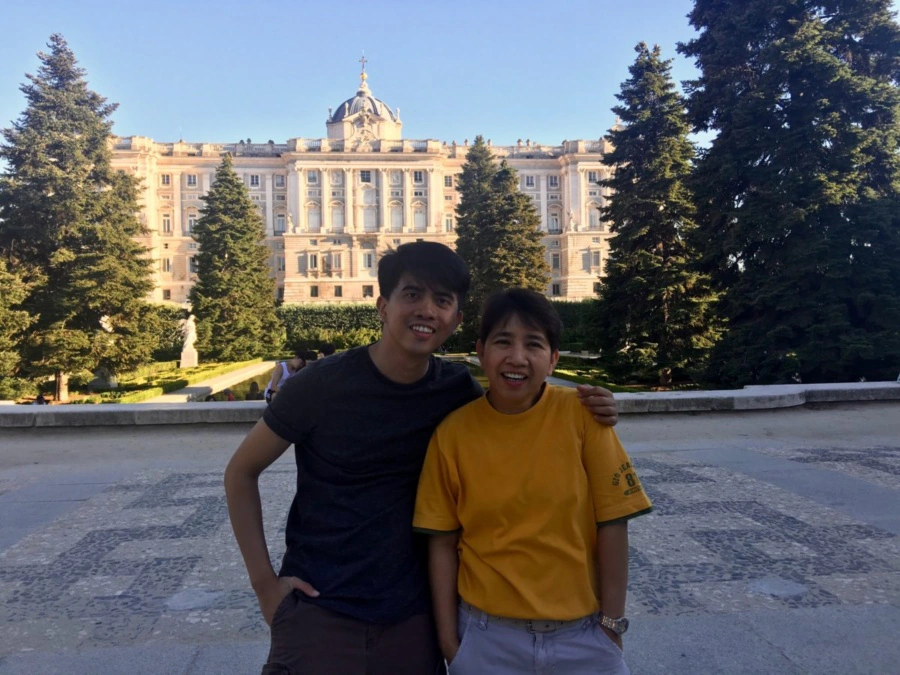
At Jardines de Sabatini with my aunt Babit.
The Palacio Real, or Royal Palace, is the official residence of the Spanish royal family, although it is used only for state ceremonies, official banquets, and other formal events. Instead, they reside at the Palacio de la Zarzuela, just outside the city. Visitors can explore the palace's two gardens for free. One is the Sabatini Gardens, with formal hedges, fountains, and symmetrical landscaping. The other is Campo del Moro, a larger park with walking paths and picturesque views of the Royal Palace.
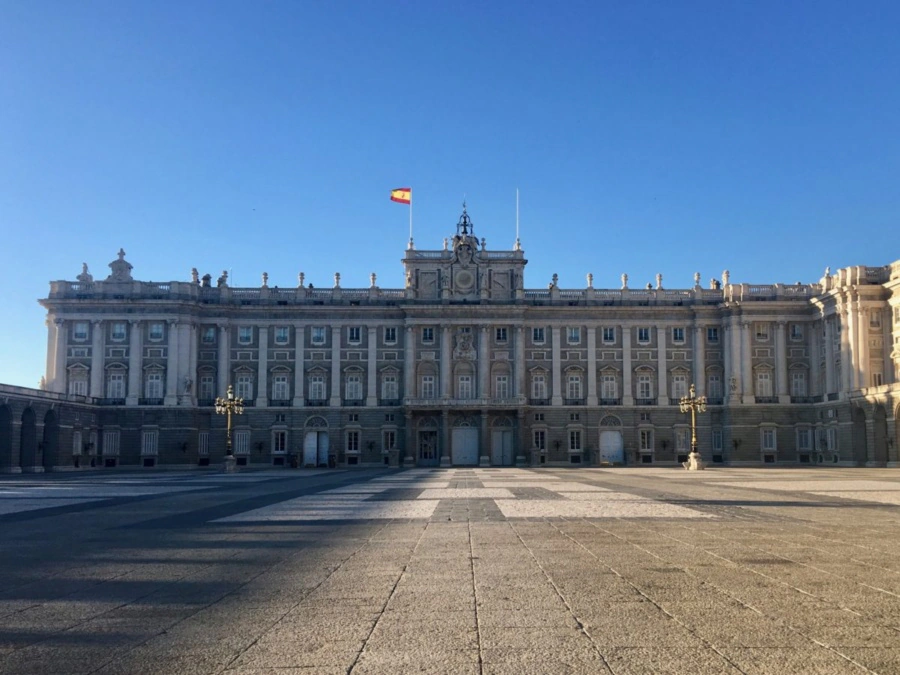
The Royal Palace grounds in Madrid. Photo: Lord Acuña
You can also tour the lavish interiors, including the Throne Room, the Royal Armoury, and the beautifully decorated State Apartments. With more than 3,000 rooms, the Royal Palace of Madrid is one of the largest royal palaces in Europe. Its grand halls, historic artworks, elegant furnishings, and centuries-old ceremonial spaces offer a fascinating glimpse into Spain's royal heritage.
Location: Centro, 28071 Madrid, Spain
Cost: From €22
2. Almudena Cathedral
Nearest Metro station: Ópera
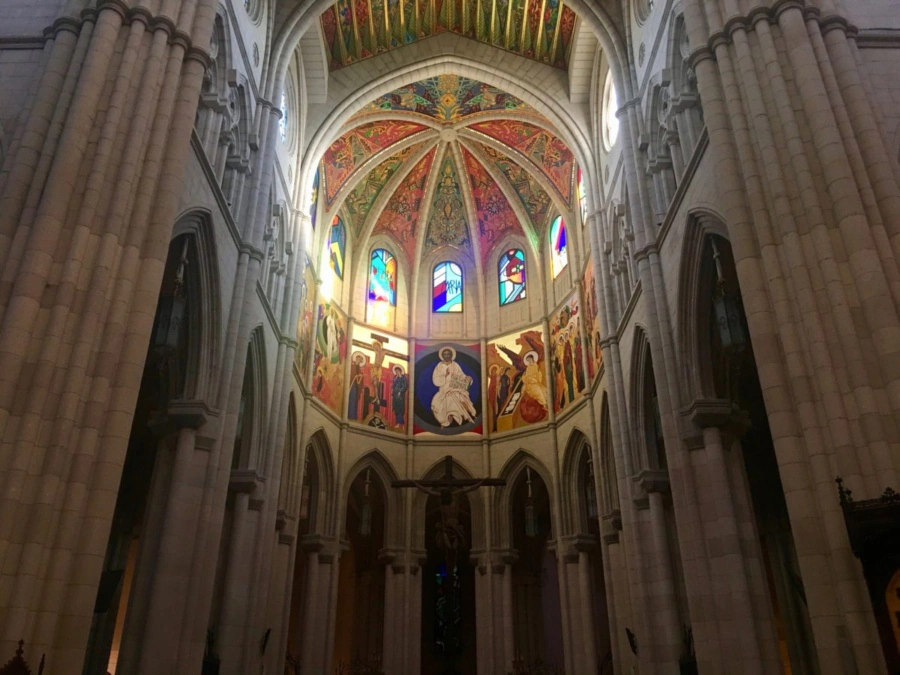
Inside La Almudena Cathedral. Photo: Lord Acuña
Catedral de Santa María la Real de la Almudena, or simply Almudena Cathedral, is the seat of the Roman Catholic Archdiocese of Madrid. Located directly opposite the Royal Palace, it is one of the city's most important religious landmarks. Construction began in the late 19th century, but the cathedral was not consecrated until 1993 by Pope John Paul II during his fourth visit to Spain. Admission is free, although donations are appreciated. If you have time, don't miss the dome, which offers spectacular views of Madrid and the Royal Palace.
Location: Calle de Bailén, 10, Centro, 28013 Madrid
Cost: Free
3. Puerta del Sol
Nearest Metro station: Sol
Puerta del Sol, which means Gate of the Sun, is one of Madrid's busiest and most important public squares. It is home to several landmarks, and is often the first place visitors explore. In particular, here are a few highlights to look out for:
Kilómetro Cero
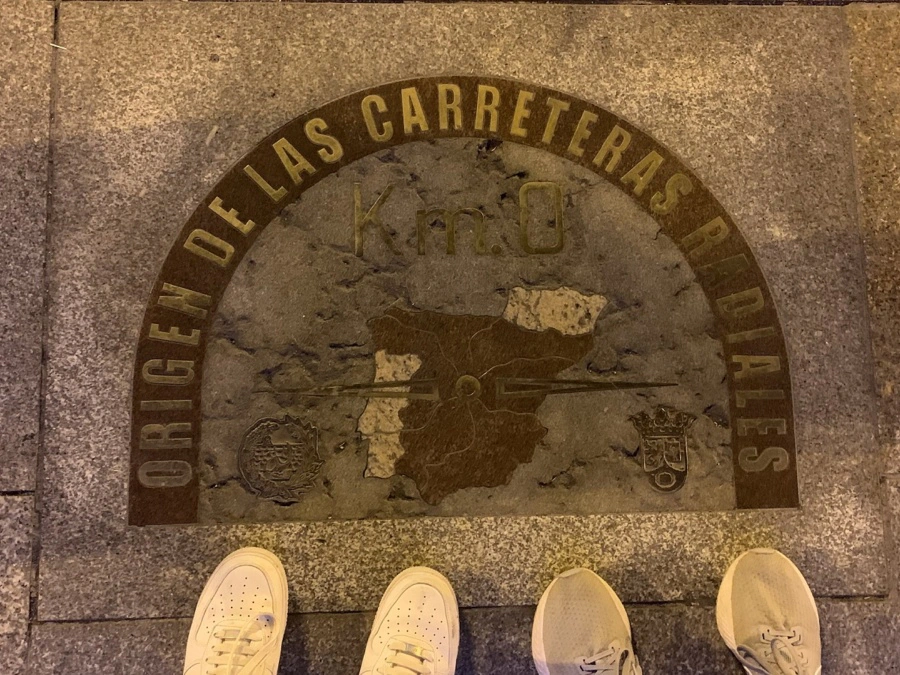
Found the Kilometre Zero sign in Madrid! Photo: Lord Acuña
Let's start with the Kilómetro Cero (KM 0) marker, embedded in the pavement directly in front of the Real Casa de Correos. This small plaque marks the official starting point from which distances on Spain's historic radial roads are measured. Although it is an important landmark, it's surprisingly easy to miss, so keep an eye out for it.
El Oso y el Madroño
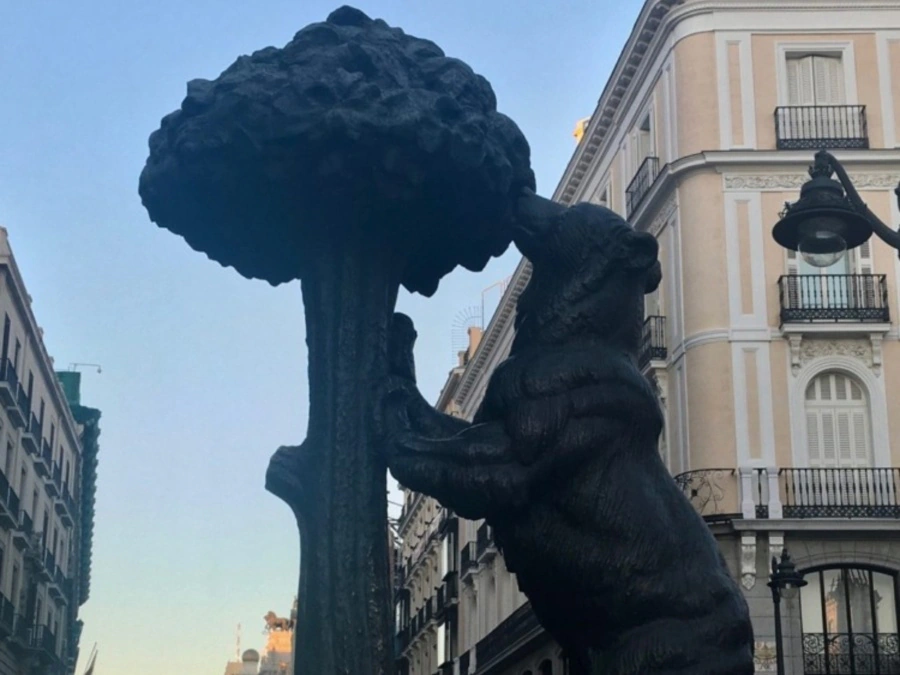
The statue of the Bear and the Strawberry Tree. Photo: Lord Acuña
Another highlight is El Oso y el Madroño, or The Bear and the Strawberry Tree, which appears on Madrid's official coat of arms. Created by Spanish sculptor Antonio Navarro Santafé in 1966, the bronze sculpture stands on the eastern side of the square. It's a popular meeting point for both locals and tourists, and one of the city's most photographed landmarks.
Spain's Only Jollibee
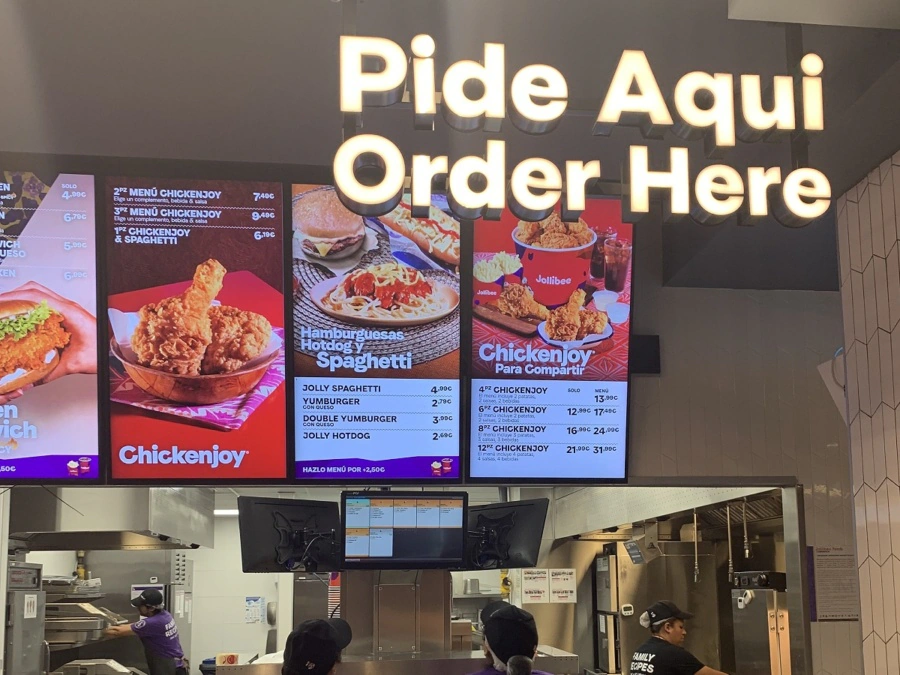
Of course, I had to try Jollibee in Madrid! Photo: Lord Acuña
For fellow Pinoys, you'll also find the first and only Jollibee branch in Spain just a few steps away. Located on Calle del Arenal, it's a familiar taste of home if you're craving Chickenjoy or Jolly Spaghetti while exploring Madrid. Since opening in 2021, the beloved Filipino fast-food chain has also become popular with locals and tourists.
Location: Calle Arenal, 4, 28013 Madrid
Opening hours: 11:00 - 00:00 daily
4. Plaza Mayor
Nearest Metro stations: Sol and Ópera
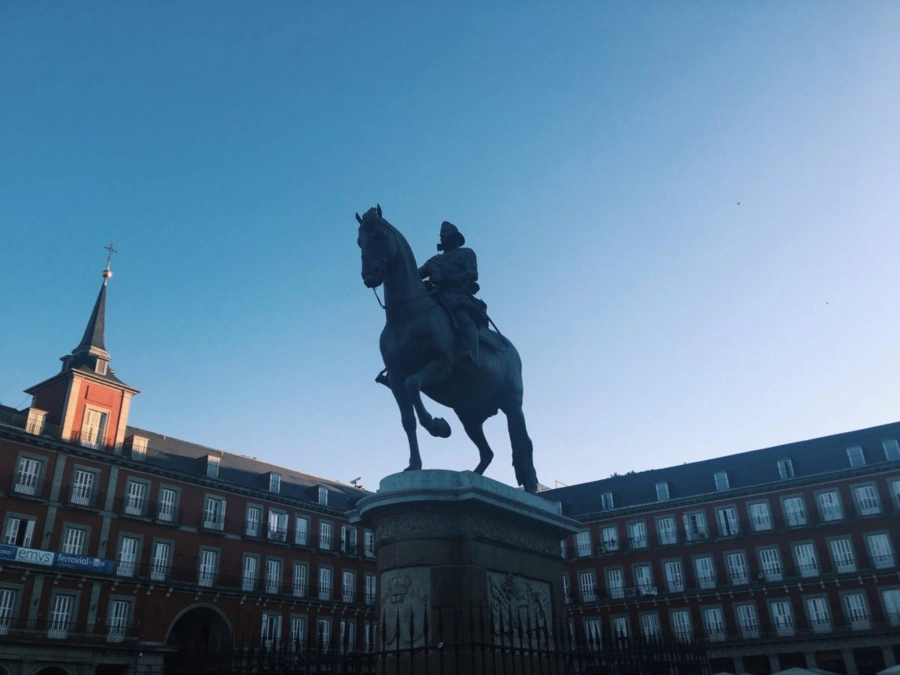
The statue of King Philip III on a horse in Plaza Mayor, Madrid. Photo: Lord Acuña
Plaza Mayor is Madrid's historic main square, with an equestrian statue of King Philip III standing at its centre. The current plaza was built between 1617 and 1619 and, more than 400 years later, remains one of the city's liveliest gathering places. Nine entrance arches lead into the plaza, now filled with cafés, street performers, tourists, and locals. Its symmetrical rectangular layout and distinctive red-painted façades also make the square an architectural highlight.
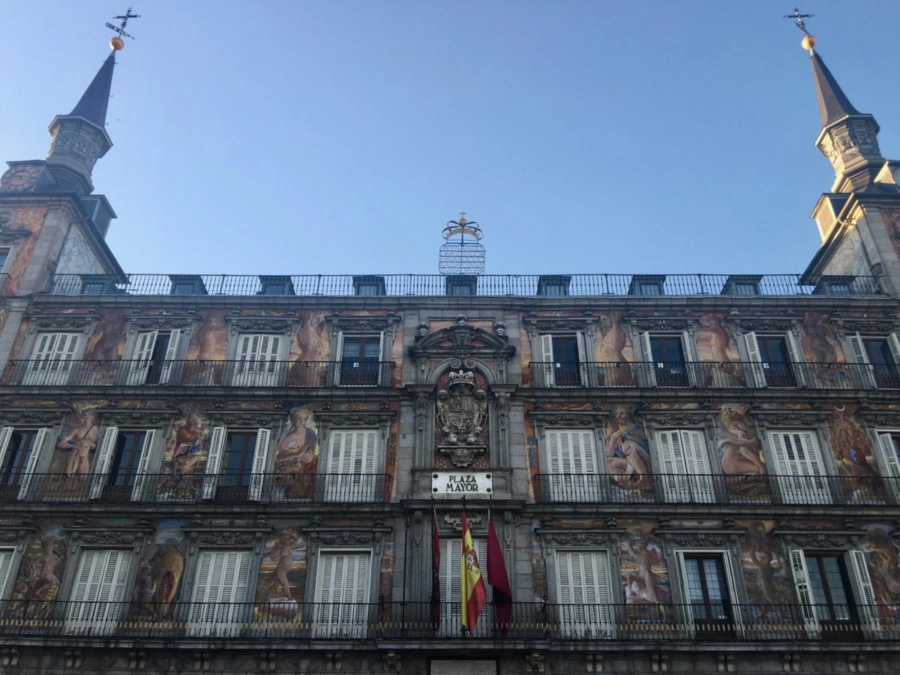
The impressive murals adorning one of the buildings in Plaza Mayor. Photo: Lord Acuña
In addition, movie buffs may find this area familiar. Plaza Mayor has appeared in several films and television series. Notable examples include The Bourne Ultimatum, The Dictator, Manolete, and Open Your Eyes, as well as various Spanish television dramas.
5. Mercado de San Miguel
Nearest Metro station: Ópera
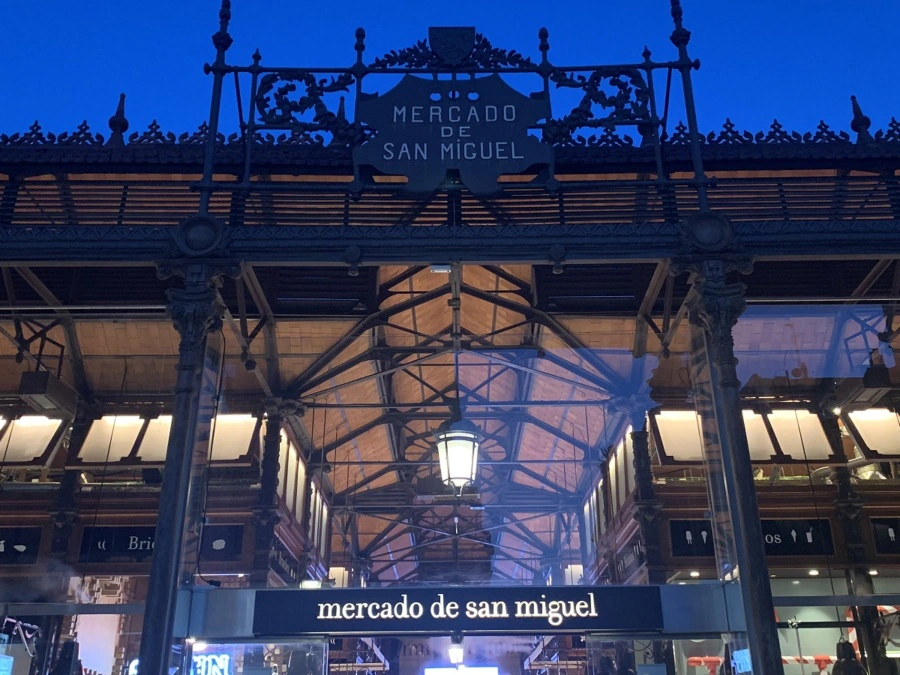
The entrance to San Miguel Market. Photo: Lord Acuña
Just beside Plaza Mayor is Mercado de San Miguel, a bustling food market known for its gourmet food stalls. The market dates back to 1916 and is one of the few remaining iron-and-glass market halls in the city. Restored and reopened in 2009, it transformed from a traditional neighbourhood market into a culinary destination.
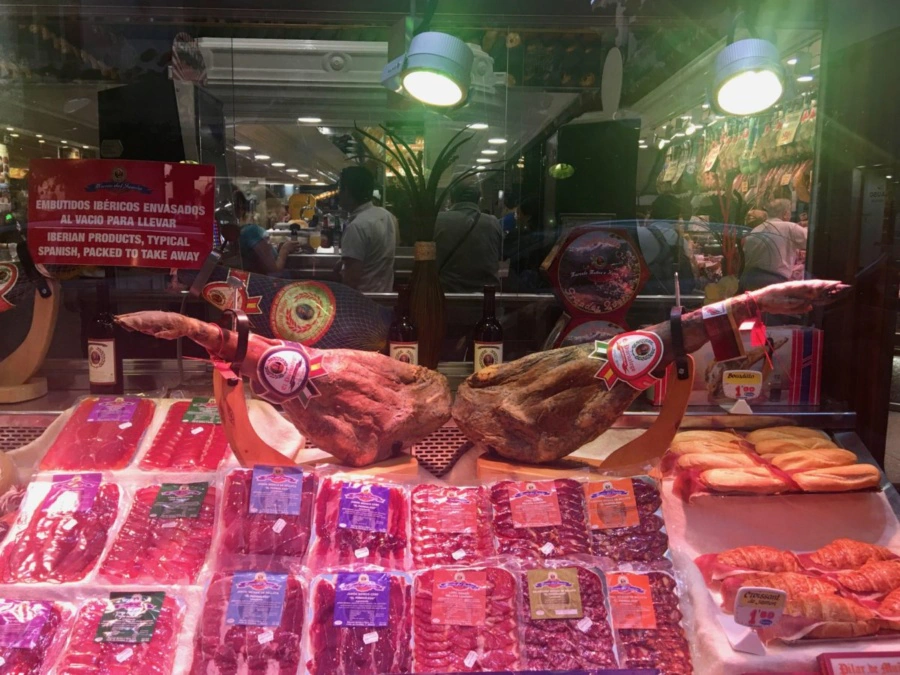
The famous tapas! Photo: Lord Acuña
Now, the food market focuses on ready-to-eat food and Spanish gastronomy. Dozens of stalls offer a wide variety of tapas, from fresh seafood and cured meats to local cheeses and pastries. As a result, visitors can sample different dishes in a single visit.
6. Sobrino de Botín
Nearest Metro stations: Sol and Ópera
Botín Restaurant is recognised by Guinness World Records as the world's oldest continuously operating restaurant. Founded in 1725 by French cook Jean Botín and his wife, it has remained in the same location for centuries. Today, it is owned by the González family, who took over in the 20th century. Just a few minutes' walk from Plaza Mayor, the restaurant serves classic Castilian dishes such as cochinillo asado (roast suckling pig) and cordero asado (roast lamb).
Location: Calle Cuchilleros 17, 28005 Madrid
Opening hours:
Lunch: 13:00 – 16:00
Dinner: 20:00 – 00:00
7. Plaza de Cibeles
Nearest Metro station: Banco de España
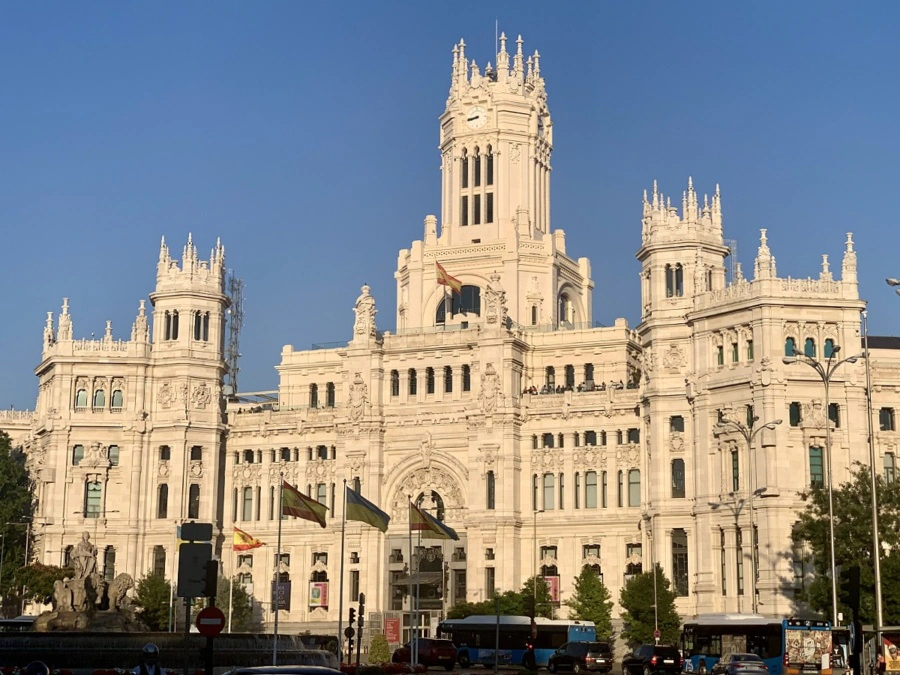
The striking white-stone façade of Palacio de Cibeles. Photo: Lord Acuña
Plaza de Cibeles is among Madrid's most recognisable landmarks. At its centre stands the Cibeles Fountain, depicting the Greek goddess Cybele riding a chariot pulled by two lions. Overlooking the square is the Palacio de Cibeles, formerly known as the Palace of Communication. Now Madrid's City Hall, the building's observation deck, open every day except Monday, offers panoramic views over the city.
8. El Retiro Park
Nearest Metro stations: Retiro and Ibiza
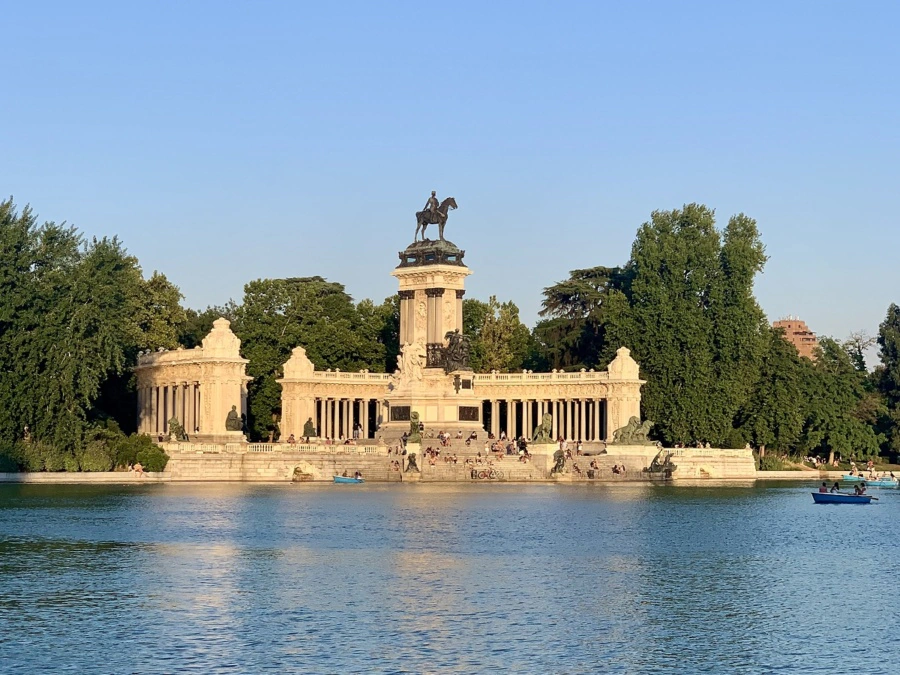
A peaceful afternoon by Retiro Lake. Photo: Lord Acuña
El Retiro Park, or Parque del Buen Retiro, is a beautiful green space covering around 125 hectares. It's the perfect place to relax, exercise, enjoy a picnic, or simply escape Madrid's busy streets. Best of all, entry to the park is free, making it an easy stop for visitors exploring the city.
Park Attractions
A. Estanque Grande – Retiro Lake is a large artificial lake located near the park's entrance, overlooked by the imposing Monument to Alfonso XII. Visitors can rent rowboats, soak up the lakeside atmosphere, or stroll along the waterfront.
B. Palacio de Cristal – Built in 1887, the Crystal Palace features glass walls supported by an elegant iron framework. Reflections on the nearby Retiro Lake make it a favourite with photographers.
C. La Rosaleda – A beautifully designed garden with thousands of roses, best visited in spring and early summer when the flowers are at their peak.
D. The Gardens – Explore quieter areas, including the Parterre Garden, a French-style garden, and the Cecilio Rodríguez Gardens, known for their fountains and resident peacocks.
E. Fuente del Ángel Caído – Finally, visit the Fallen Angel Statue, one of the park's most unusual landmarks, depicting Lucifer falling from heaven. It is one of the few public monuments in the world dedicated to the devil.
9. José Rizal Monument
Nearest Metro station: Islas Filipinas
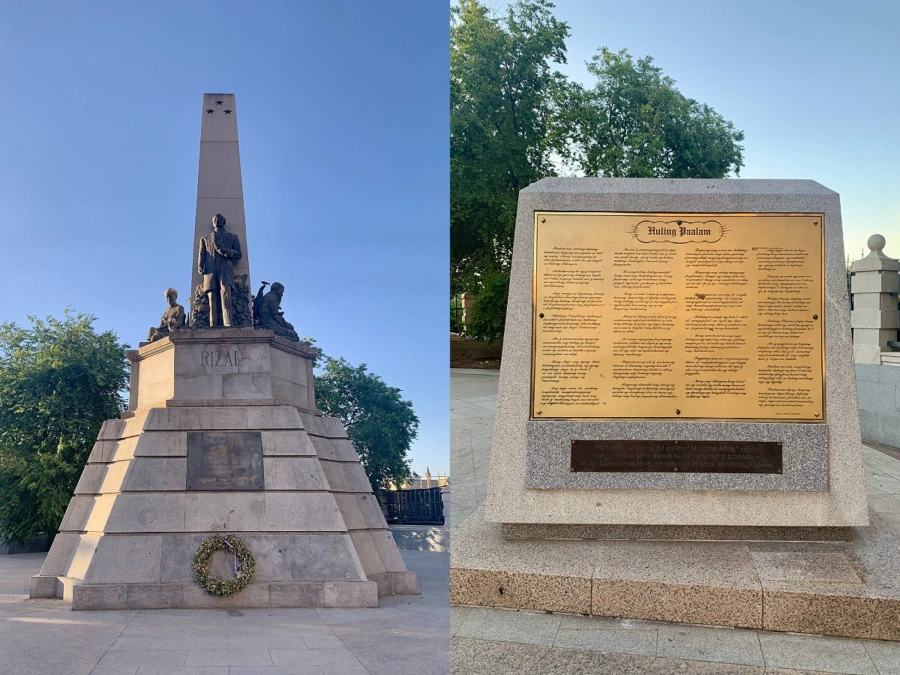
(L) The statue of José Rizal. (R) The poem he wrote before his execution. Photo: Lord Acuña
Filipino hero José Rizal spent several formative years in Madrid as a student, writer, and reformist before his execution in the Philippines in 1896. For many Filipinos, visiting the José Rizal Monument in Parque de Santander, at the corner of Avenida de Filipinas, is a meaningful stop. Unveiled in 1996 to mark the centenary of Rizal's death, the monument is a near-exact replica of its Manila counterpart.
Location: Calle de Santander, 1, Chamberí, 28003 Madrid
Cost: Free
10. Nuevos Ministerios
Nearest Metro station: Nuevos Ministerios
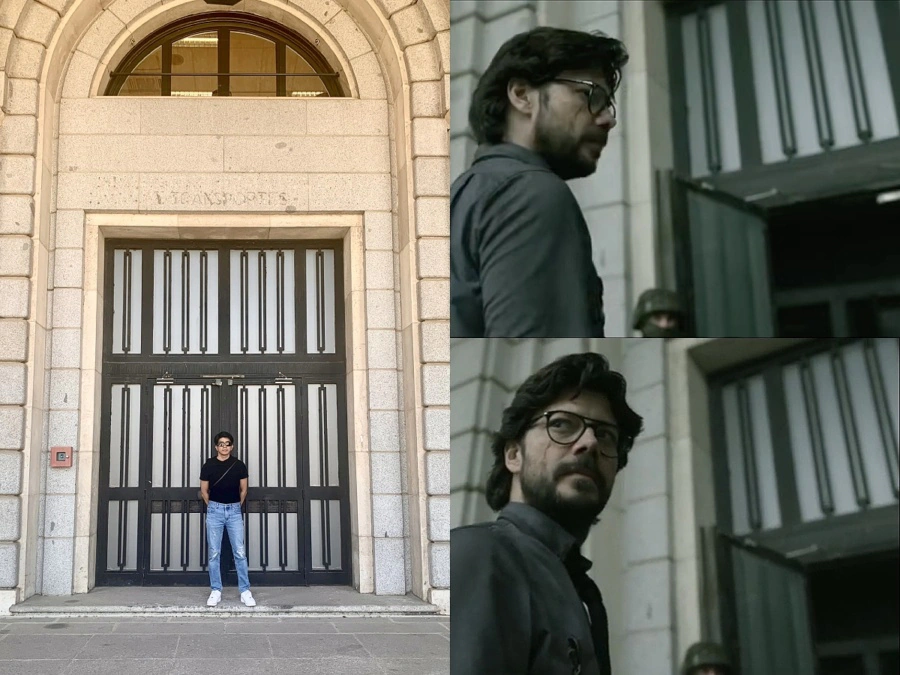
(L) Me standing in front of Nuevos Ministerios. (R) Screenshots from Money Heist.
While not a traditional tourist attraction, fans of the Netflix series La Casa de Papel (or Money Heist) may find Nuevos Ministerios worth a visit. In the show, the building's façade was used as the exterior of the Bank of Spain during the heist. If you loved the series like I did, make a quick stop for a few photos and pretend El Profesor is about to rescue you.
In case you didn't know, Plaza Mayor also makes a brief appearance in the series. Nuevos Ministerios is a little farther from the usual tourist circuit, so if you're short on time, you can check out Plaza Mayor instead.
Location: Calle de Agustín de Betancourt, 4, Chamberí, 28003 Madrid
Conclusion
If your schedule allows, I recommend spending at least a week in Madrid to discover more of what the Spanish capital has to offer. This gives you enough time to explore its rich history, sample traditional cuisine, and experience the charm of the Madrileños. I hope this guide has been helpful in planning your trip. ¡Adiós!
Comments
Missed out on Madrid, rather Spain in general. I hope to do this and Italy together and fingers crossed for soon! Thanks for sharing these lovely sights, especially all those museums and heritage destinations.
Ahhh I badly wanna go to Italy too! Next time definitely!
Ahh Madrid, one city which I really want to explore and Roam around with people I love!..I really want to do the things mentioned in the article. I really wanted to visit as the football team is my favourite one!!…I would really visit Madrid one day and definitely do the things mentioned!!
Yes! Real Madrid team is awesome! 🙂
I love Spain, and Madrid is certainly an amazing city to explore. The Plaza Mayor is a great place to experience that magnificence. I missed the Catedral de Sta. María la Real de la Almudena. It looks incredible!
I love it too! I think it’s my most favourite country I’ve been to.
I should probably start learning spanish now. Europe and Latin America are high up on my list. I have a question to ask..when you write 11,20 Euro does that mean 11.20 or 1120?
I’m actually learning Spanish now! 🙂 And good question, it means 11.20. They use commas and periods the other way for Euros.
So does that mean 11.200 Euro means 11,200?
It means 11 Euros and 20 cents!
Madrid is on the top of my European travel list. It looks beyond picturesque and the museum I’d love to visit most is here – the Prado with the Goyas.
I did not see that as I was there for only a few days! But indeed the place is amazing! I’d totally live there. 🙂