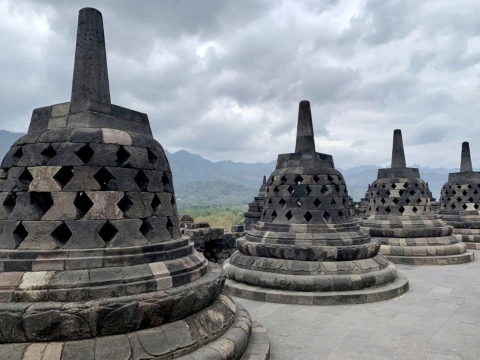
Located on the island of Java, Yogyakarta is home to two UNESCO World Heritage Sites: Borobudur and Prambanan temples.
Indonesia may have the world's largest Muslim population, but in Yogyakarta (or Jogjakarta) you'll find two of its most remarkable religious landmarks: the Buddhist Borobudur Temple and the Hindu Prambanan Temple. When my friend Paolo of The Wknd Travel invited me to join this trip, I immediately said yes without knowing what to expect. Here's what I learned on my visit to this historic Indonesian city.
Yogyakarta Overview
Country: Indonesia
Country Code: +62
Continent: Asia (Southeast)
Timezone: GMT+7
Currency: Indonesia Rupiah (IDR)
Airport: Yogyakarta International Airport (YIA)
Language: Bahasa Indonesia
Borobudur Temple
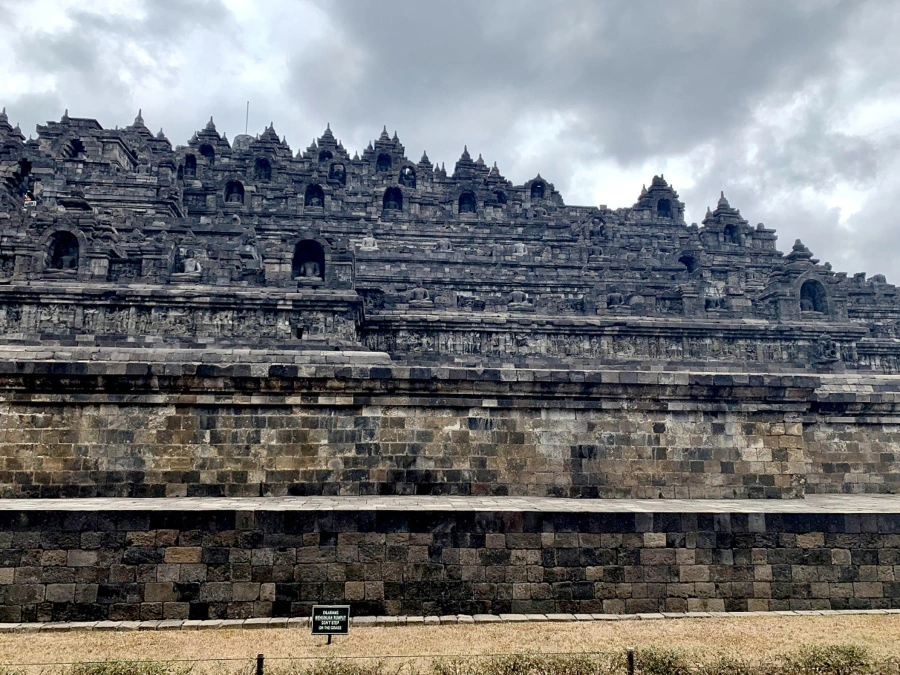
The layered terraces of Borobudur Temple. Photo: Lord Acuña
Built between the 8th and 9th centuries by the Shailendra dynasty, Borobudur is the largest Buddhist temple in the world. Designed as a spiritual journey, this massive stone monument leads visitors through nine stacked terraces. The lower levels represent the world of desire, the middle terraces symbolise the world of forms, while the upper circular platforms represent enlightenment. If you follow every gallery, the path spirals upwards for nearly 5 km.
Intricate Carvings
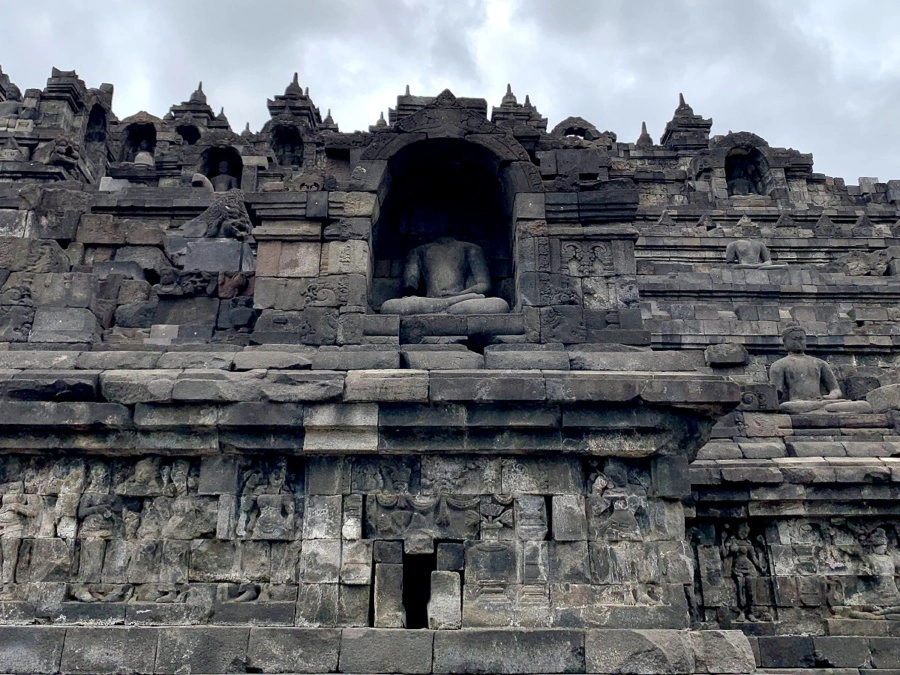
A headless Buddha statue. Photo: Lord Acuña
The monument contains over 2,600 relief panels carved into volcanic stone. It also features around 500 Buddha statues and 72 perforated bell-shaped stupas, each containing a seated Buddha, surrounding the central stupa. The reliefs depict episodes from the life of the Buddha, Buddhist teachings, and scenes from daily life in ancient Java. Together, these remarkable carvings provide historians with an unusually detailed insight into 9th-century Javanese society.
Rediscovery and Restoration
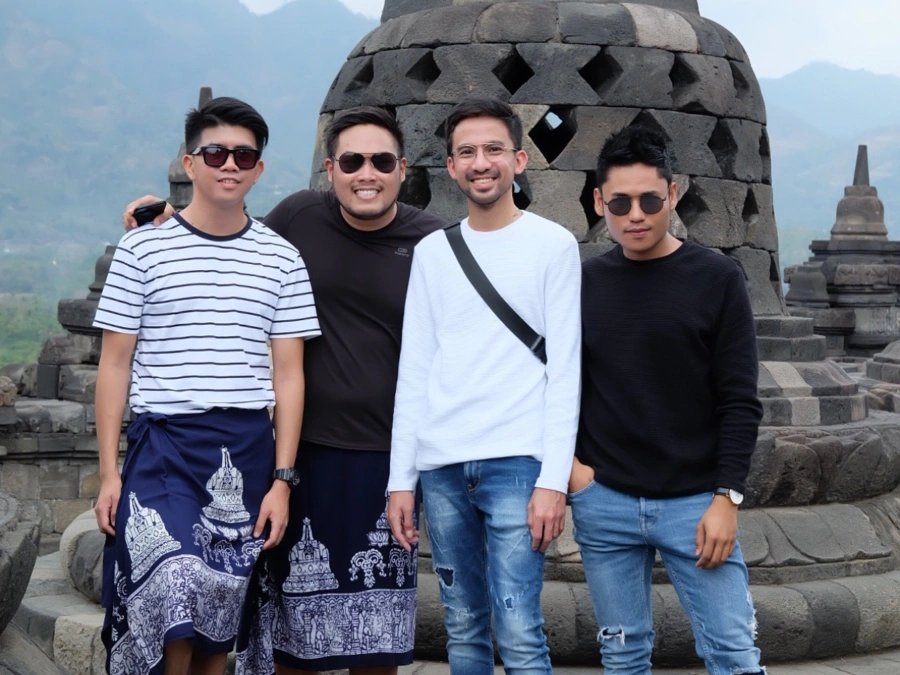
With my friends at Borobudur Temple – two of us had to wear a sarong.
After volcanic eruptions, shifts in political power, and the spread of Islam in Java, Borobudur was gradually abandoned and eventually buried beneath volcanic ash and dense jungle. In the early 19th century, it came to wider international attention under Java's British administration led by Thomas Stamford Raffles. Extensive restoration followed over the decades, including a major conservation project led by UNESCO in the 1970s and 1980s.
Location: Magelang Regency, Central Java, Indonesia
Includes: Hotel pick-up + Prambanan Temple Complex
Prambanan Temple Complex
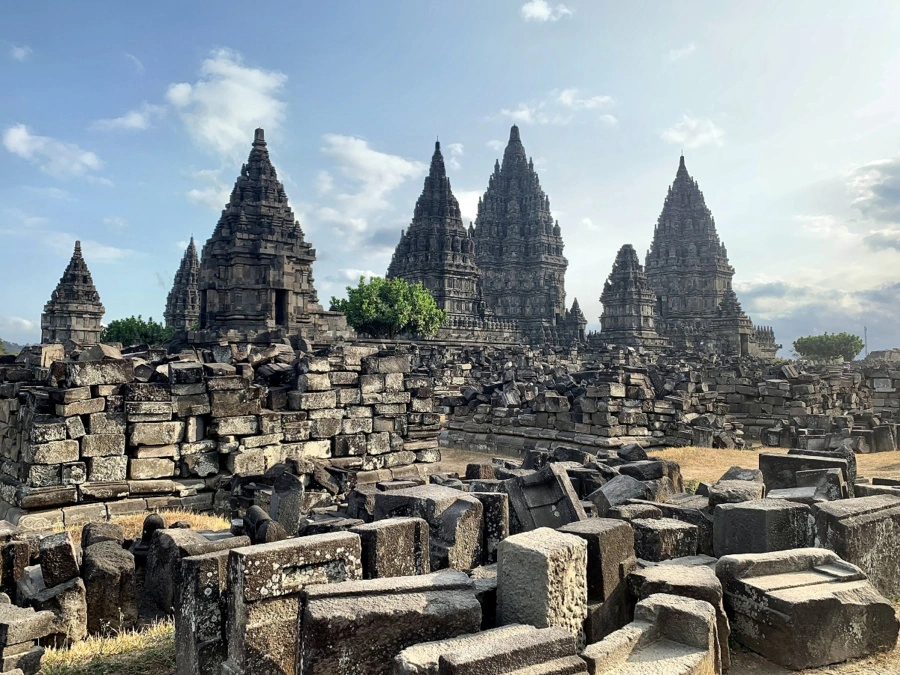
Visited Prambanan Temple Complex in the afternoon. Photo: Lord Acuña
Prambanan is the largest Hindu temple complex in Indonesia, built around the same period as Borobudur, most likely by the Sanjaya dynasty. The main complex, known as Trimurti, honours the three principal Hindu deities: Shiva, Vishnu, and Brahma.
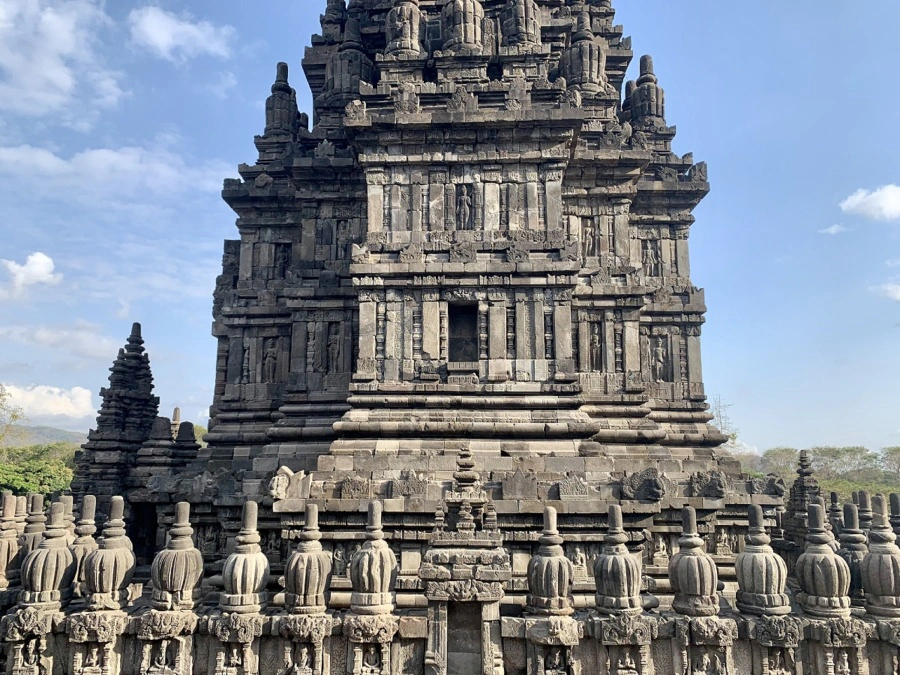
The Brahma Temple at Prambanan. Photo: Lord Acuña
Each main temple is paired with a smaller shrine dedicated to its vahana, or sacred animal. Unlike Borobudur's broad, terraced form, Prambanan is defined by its slender and soaring towers. The architecture emphasises verticality, drawing the eye upwards. Walking through the complex feels like wandering through a city of stone spires.
The Ramayana
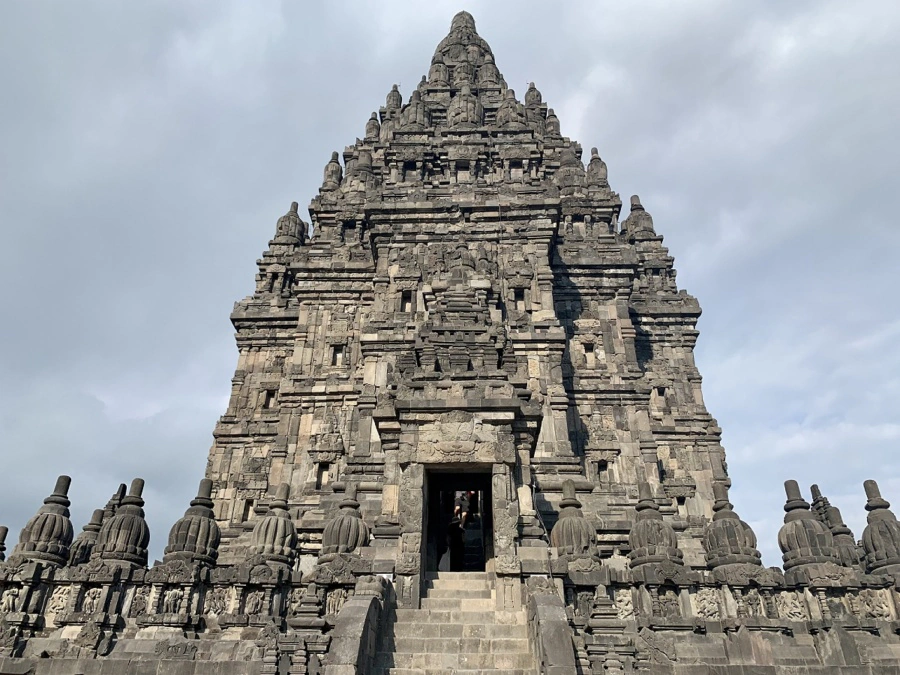
The grandeur of the Shiva Temple at Prambanan. Photo: Lord Acuña
The walls of the Shiva Temple are carved with scenes from the Ramayana, one of Hinduism's greatest epics. Visitors can follow the story panel by panel as they walk clockwise around the temple. On many evenings, the nearby open-air stage hosts the Ramayana Ballet, a dance drama that retells the epic against the illuminated temples.
Location: Jl. Solo-Yogyakarta Rd, Prambanan, Sleman, Yogyakarta 55571, Indonesia
Includes: Hotel pick-up + Borobudur Temple
Both Borobudur and Prambanan are recognised as UNESCO World Heritage Sites for their outstanding architecture and historical significance. These major tourist attractions remain active places of worship today. So when visiting, be respectful of their religious importance and remember to wear modest attire.
Comments
Be the first to comment!