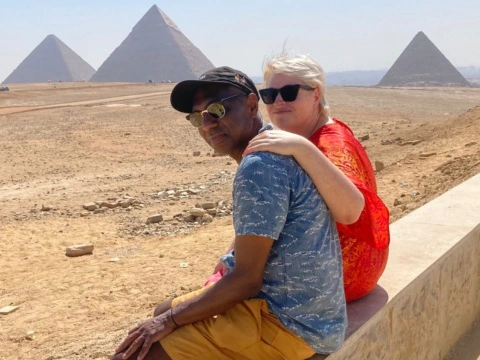
My friend Sophie Cullen speaks to me about The Hotel Journal, her travels, hotel design, industry trends, and more.
Often, when people travel, the destination takes centre stage, while the accommodation plays a supporting role. But for some travellers, the stay is just as important as the trip itself.
That’s the space Sophie Cullen, founder of The Hotel Journal, has carved out. Through her platform, she tells the stories of unique, beautiful and downright awe-inspiring hotels, as well as the talented people behind them. From boutique properties in heritage European buildings to modern hideaways across Asia, she shines a light on the places that make a stay truly memorable.
Hey Sophie, congratulations on the fifth anniversary of The Hotel Journal! What inspired you to create it?
SC: Thanks so much for having me, Lord.
Architecture and design have always been a huge part of my life. I actually started my university studies as an architecture student before transferring to Film & Theatre. When I was 23, I moved away from New Zealand and travelled extensively through Asia for about 15 years.
Hotels and guesthouses with a unique design story always attracted me. As the Deputy Editor for Hong Kong's leading architecture and design magazine, I had the opportunity to cover some major hotel openings, such as Rosewood Hong Kong, Four Seasons Jakarta, and Capella Ubud. I really loved getting into the design story with the architects and designers.
When I moved into an Editorial Director role for a lifestyle publication, I really missed exclusively focusing on hotels and design stories. So that's why The Hotel Journal was born. It's for people who see the hotel or accommodation selection as a key part of their holiday, not just an afterthought.
And nowadays, many of those architects and designers whom I used to interview (and still do) are regular readers of the website, which makes me really happy.
What gap did you hope The Hotel Journal would fill in the travel media space?
SC: I felt there was a gap in how hotels were being covered. Oftentimes, people think about hotel design as merely the colour, material and art choices. But good hotel design is so much more than that. It’s the way people, including staff, move through the spaces without causing delays. It’s how a space makes you feel across all of your senses. And it’s how you automatically know which direction you should be going without signs pointing you there. So there’s lots to dig into.
Over these five years, we’ve also noticed that people were increasingly asking us for recommendations on things to do around the hotels we write about. That’s why we’ve added travel and food guides so that our readers get the best of both worlds.
The Hotel Journal features contributions from experienced travel journalists around the world. What's it been like collaborating with them, and what have you learned from the experience?
SC: Surrounding yourself with the right people, whether from a business or personal perspective, has always been really important to me. And I’m happy to say that all of the contributors, from New Zealand to London, are now friends of mine. We have a shared passion for unique hotel design stories, exceptional service and authentic travel experiences that inform and entertain. I think this really comes through in the quality of the content we produce. It’s very personal, and we focus on the small details from a very human perspective. This is something we think is even more important in the world of AI.
I’ve learned, as an Editor, that I need to lift my game as a writer! Our writers are world-class, and when I read their work, it humbles me as a writer and makes me want to craft even better stories for our readers. We’re fortunate to have such a diverse team of international writers and seasoned travellers sharing their tales so thoughtfully.
You've lived in Oceania, Asia, and now Europe. What shaped your approach to travel?
SC: It’s so interesting to see how different groups of people travel. My father was in the transport industry, and was a firm believer in seeing your own country before travelling abroad. So as a family, we road-tripped around New Zealand, from Cape Reinga to Invercargill. Because New Zealand is so far away from other countries (Australia is still three hours away), people tend to do a lot more domestic travel. We’re lucky to have a selection of every type of landscape, from beaches to forests to mountains.
That idea of seeing a country by land has really stuck with me. I love to take a train, a bus, a car or a boat when I’m in a new place so that I can see it from different angles. I think it also imparted to me the idea of simple travel. You don’t need to pack lots to have a good time and still look stylish. I travel with a carry-on wherever possible, and it just makes life so much easier.
And then you started building a life overseas. Where did that take you?
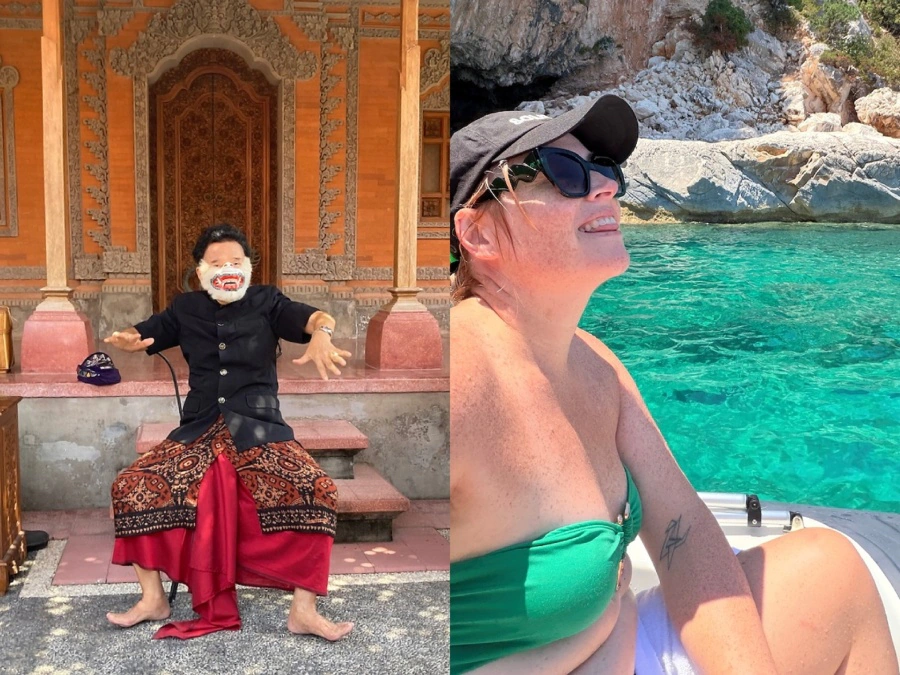
(L) Learning abut traditional Balinese mask dancing. (R) Sophie Cullen soaking up the sunshine in Sardinia, Italy.
SC: When I moved to South Korea, I explored the country a lot as it’s well connected by bus and rail. Living there also got me in the habit of short trips to places like Japan, China and the Philippines. This was doubled down when I lived in Hong Kong, where it’s normal for people to do a weekend in Thailand, Vietnam or Taiwan. Asia is such a beautiful and diverse continent, and I’m such a big fan of the architecture, the food and the scenery. Obviously, it’s not a monolith, and it’s that uniqueness that captivates me. Whether I’m exploring temples in China or learning about Balinese dance in Indonesia, I often find my breath taken away by the beauty of it all.
Now that I live in Europe, I love how easy it is to pop to different countries. London is so well connected, so we’re very spoiled for choice. It’s been eye-opening to see artworks by the masters in Italy, to explore the perfume industry in Grasse, France, and to uncover local delicacies in Spain.
Out of all the hotels you've stayed at over the years, which one stands out the most, and what made it so memorable?
SC: OMG. Where to start?!
One that really stands out was Keemala in Phuket. It was designed with this unique story around fictional tribes, and the architecture reflects this. The arrival experience is quite magical. The large gates swing open and all of a sudden you're in this rainforest with huge nest-type structures and woven tented villas kind of suspended through the landscape. It feels like you're in a movie. There are rescued buffalo wandering around the garden, and they grow a lot of their own produce, so the food is super fresh and seasonal.
Clearly, choosing just one is difficult. What other properties would you mention?
SC: Another spot that I love is La Esperanza Granada, a hacienda in southern Spain. It's actually owned by a fellow travel Editor, Christine Cunanan, who bought the property on a whim during COVID. She's had it lovingly restored, with artists who work on the nearby Alhambra, so the design and the artwork are absolutely exquisite. It has the most magical view of the countryside, and there’s barely any noise, so it’s the perfect place to unwind. I have fond memories of eating perfectly cooked seafood in the courtyard as the sun set.
Also, we recently stayed at Grand Velas Riviera Maya, an all-inclusive resort in Mexico that takes things to the next level. Our butler made life easy. There was a Michelin-starred restaurant on site, and the spa had a series of treatments inspired by Mexican ingredients. What I loved most, though, was the way that nature was integrated into the site. There were some small cenotes across the property, and you could do a tour to learn about the ecology. We’d be lying by the pool, and coatis would just be strolling past.
Is there a hotel that you keep coming back to?
SC: One hotel that we keep going back to is The Well Hotel & Spa. It’s a short drive from Oslo in Norway, and it’s a super special place. This is where we go when we want to completely switch off, as you’re not allowed to have your phone in the sauna area. It’s an amazing place with loads of different saunas, swimming pools, and Jacuzzis, and there’s even a forest filled with sculptures. The place completely changes from winter, when it's blanketed in snow, to summer, when you can enjoy time under the sun. And the team is just wonderful. We love enjoying the Aufguss (sauna infusion) rituals and reading lots of books when we visit.
Travel trends come and go. Is there a hotel or travel trend you hope is here to stay, and another you'd be happy to see disappear?
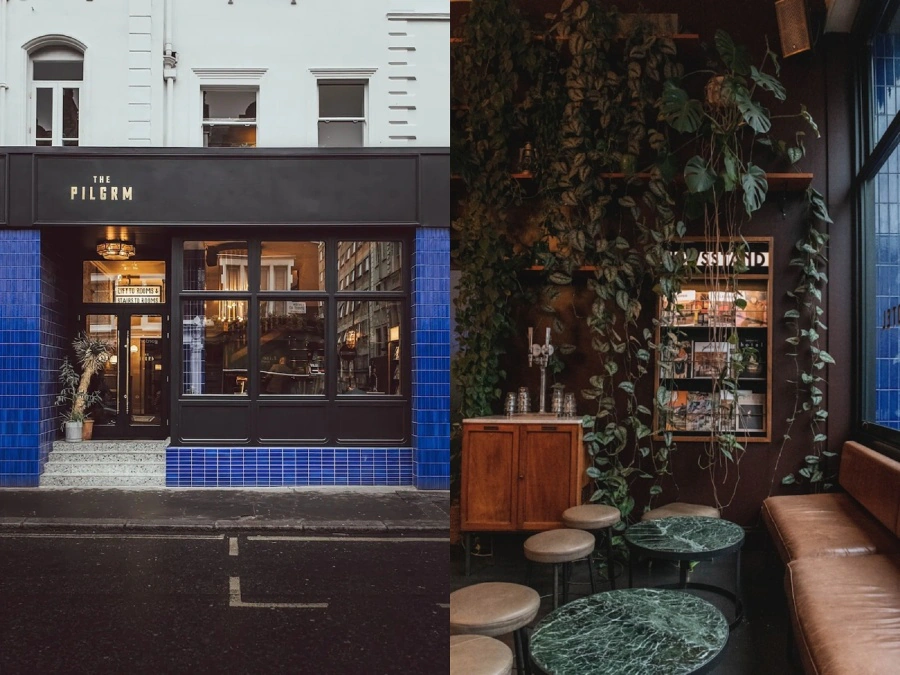
The cafe area at Pilgrm London with refillable water. Photo: Sophie Cullen
SC: It makes me happy when hotels have refillable water bottles. Nothing brings down the tone more than a beautiful room with some ugly plastic bottles. But more than that, it’s so bad for the environment. We’re seeing more and more properties make the switch. I’m hoping this isn’t a trend as much as a significant move forward in the industry. I’m just back from a stay at The Pilgrm in London, and they have refillable water stations, both still and sparkling, available for all hotel guests, which is fantastic.
Floating breakfasts can go! They are so impractical. You spend half the time chasing your heart-shaped tray around the pool, and by the time you catch it, your eggs are cold. The only exercise I should be doing at breakfast is walking from my room to the restaurant.
How do you think the hotel industry has changed over the past five years, and where do you see it heading next?
SC: Post-COVID, things changed dramatically for the hotel industry. I think one of the biggest shifts is that people want to slow down their travel and dive more into the destination they’re visiting. They want local guides to teach them about local food or to take them to places that you won’t easily find on the internet. They’re staying longer, and they want to discover places that their friends haven’t already been, whether that’s a small village off the beaten path or a local restaurant serving a certain type of food.
Sustainability cannot be an afterthought for hotels anymore. Guests are increasingly aware of what best practices are and can spot greenwashing a mile off. We want to give our money to businesses that are considering how they power their spaces. We want to see hotels investing in the nature around them and also the local economy. And most of all, we want to see how they are measuring their impact.
Beyond sustainability, where else are you seeing hotels evolve?
SC: From a logistics side, people don’t want to be queuing for a long time to check in. So, reducing friction with tools like online check-in and smartphone room keys has been huge. The ability to direct message your butler or the concierge is really helpful too. I think new and improved tech integrations will be really exciting, whether that’s the ability to pre-choose the music playing when you walk into your room or to adjust lights and sounds in your spaces on your phone.
The concept of wellness is morphing these days, too. It’s no longer just about the addition of a spa, but how wellbeing is integrated into the full design. Concepts like circadian lighting in the bedroom to help with jet lag, or including a skincare selection or red light devices in the room, are becoming more commonplace. Longevity is something that will only become more important to people. So, the hotels getting these offerings right now are the ones to ensure repeat custom moving forward, and that’s really exciting to see.
Thank you, Sophie, for such a wonderful chat – your journey is really inspiring to me!
Comments
Be the first to comment!