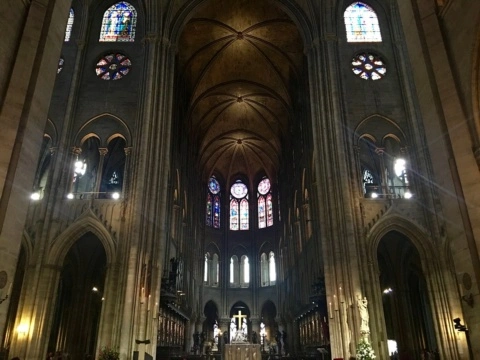
Trivia time: Here are 10 interesting facts about Cathédrale Notre-Dame de Paris that you probably did not know.
Notre-Dame de Paris is a medieval Catholic cathedral in the heart of Paris. It has played a major role in French history and culture over the centuries. Despite the devastating fire in 2019, it remains a powerful symbol of the city and is currently undergoing careful restoration.
Note: The photos used in this article were taken before the 2019 fire. Some parts may not reflect its current state.
1. Notre-Dame de Paris sits on Île de la Cité
Notre-Dame is located on Île de la Cité, one of two remaining natural islands in the River Seine in Paris. Its central position places it in the historic heart of the city, surrounded by key landmarks and major tourist routes. The island itself is widely regarded as the birthplace of Paris, making the cathedral's location historically significant beyond its religious importance.
2. A masterpiece of French Gothic architecture
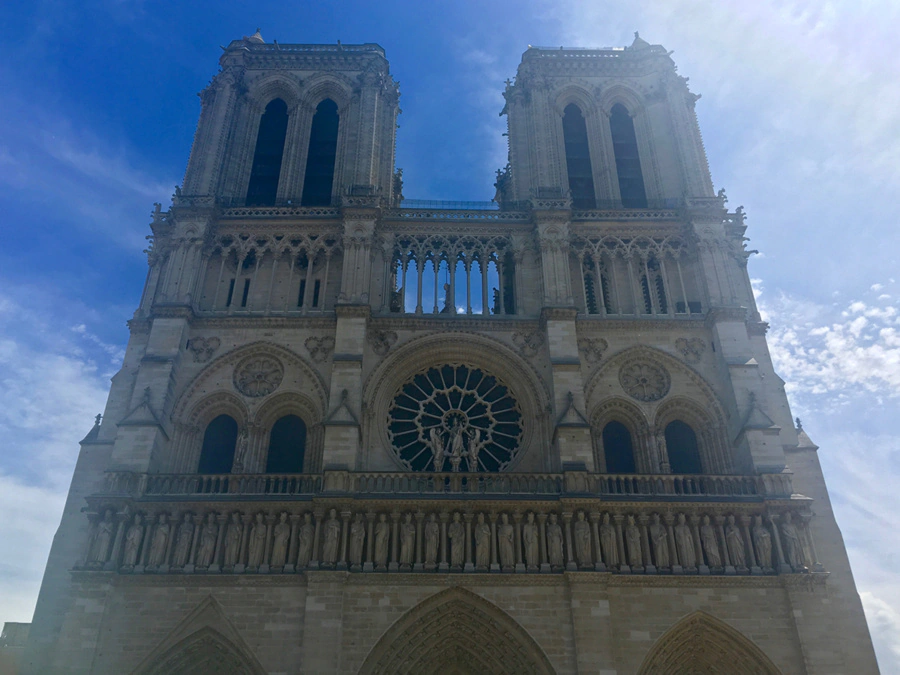
Façade of Cathédrale Notre-Dame de Paris. Photo: Lord Acuña
Built between 1163 and 1345, Notre-Dame Cathedral is one of the finest examples of French Gothic architecture. It showcases innovations such as pointed arches, ribbed vaults, and flying buttresses, which allowed for taller, more light-filled structures. The design reflects the era's emphasis on verticality and grandeur, intended to draw the eye upward.
3. The statue of Paris' first bishop
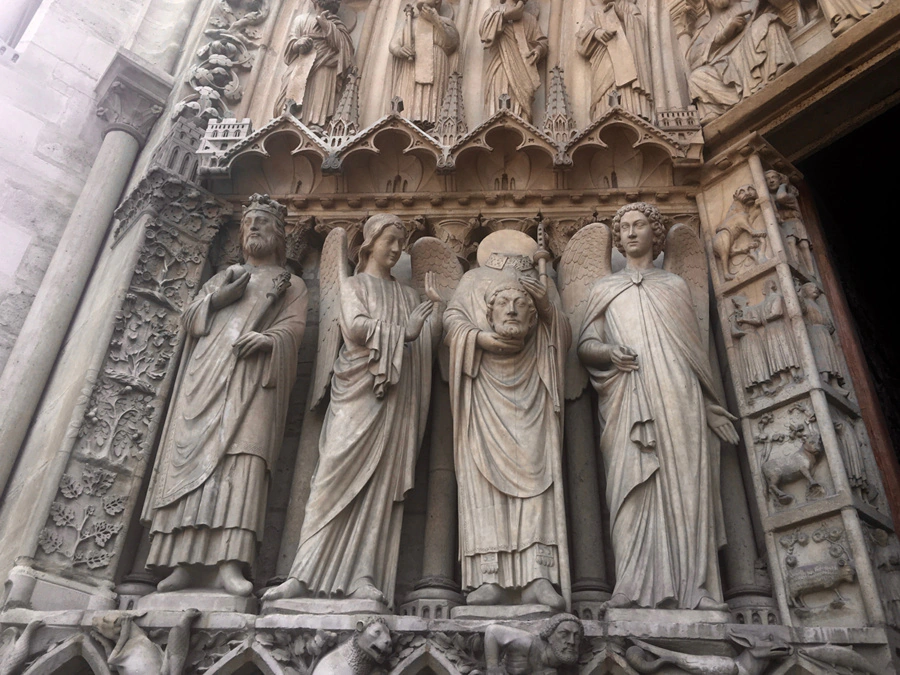
Saint Denis among the saints at Notre-Dame's entrance. Photo: Lord Acuña
At the entrance of Notre-Dame stands a statue of Saint Denis, traditionally regarded as the first bishop of Paris. According to legend, after being beheaded, he picked up his own head and walked several miles while continuing to preach, eventually reaching the site of modern-day Montmartre.
4. The cathedral houses three historic organs
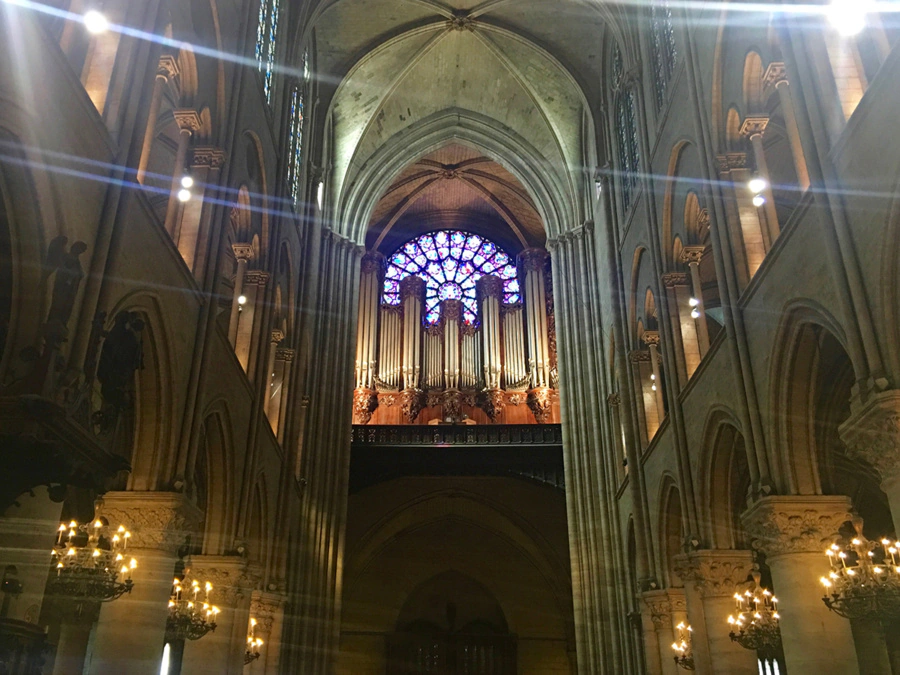
The Great Organ is one of the largest in France. Photo: Lord Acuña
The cathedral's three organs – the Great Organ, the Choir Organ, and the smaller Positive Organ – contribute to the richness and complexity of its liturgical music. The Great Organ, in particular, boasts thousands of pipes capable of producing everything from delicate melodies to powerful, resonant chords.
5. Notre-Dame preserves medieval stained glass windows
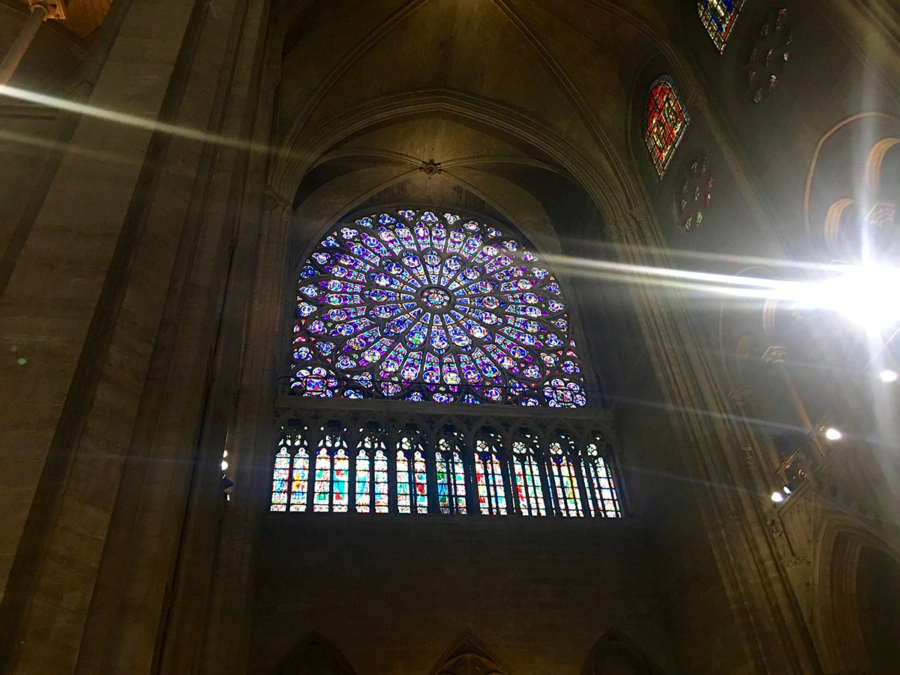
The South Rose Window in Notre-Dame de Paris. Photo: Lord Acuña
Notre-Dame de Paris preserves remarkable medieval stained glass windows, some dating back to the 13th century. The famous rose windows depict intricate biblical scenes and figures, while their deep blues and reds create a striking interplay of light inside the cathedral.
6. The Hunchback of Notre-Dame
Notre-Dame Cathedral is the central setting of Victor Hugo's novel The Hunchback of Notre-Dame. Hugo wrote the book in part to draw attention to the cathedral's neglected condition in the 19th century, helping inspire its later restoration. Most modern adaptations of the story take creative liberties, often simplifying or altering key plot points compared to Hugo's original work.
7. Relics at Notre-Dame de Paris
Notre-Dame de Paris holds some of the most significant relics in Catholic tradition, including the Crown of Thorns, a fragment believed to be from the True Cross, and one of the Holy Nails. These relics have long made the cathedral an important pilgrimage site, attracting visitors who come to venerate objects associated with the Passion of Christ.
8. Notre-Dame Cathedral is home to 21 bells
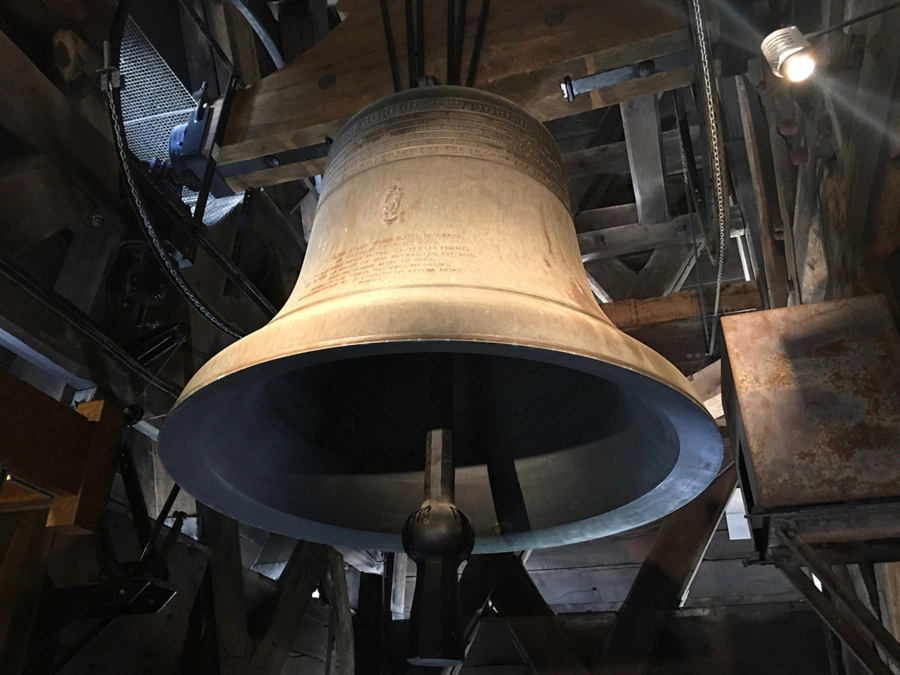
Emmanuel – the oldest and most famous bell, cast in 1683. Photo: Lord Acuña
Notre-Dame also houses 21 bells in total. The two largest, known as bourdons, are located in the South Tower and were traditionally rung manually using ropes. In the 20th century, electric motors were introduced to make ringing more efficient. The bourdons are reserved for major occasions such as Christmas, Easter, and significant events like the Pope's death or election.
9. The cathedral was severely damaged in 2019
During renovation work, a fire seriously hit the Notre-Dame Cathedral. The blaze spread rapidly through the roof structure due to its ancient timber framework, and led to the collapse of the cathedral's iconic spire. While the main stone structure, including the twin towers and much of the interior, was saved, the roof and parts of the vaulted ceiling suffered significant damage. The disaster shocked France and the world, prompting a massive restoration effort.
10. Artefacts saved from the fire
Firefighters worked for hours to prevent the cathedral from collapsing, successfully protecting key elements such as the bell towers and numerous historic artefacts, including the relics linked to the crucifixion of Jesus. Restoration efforts are still ongoing today, aiming to bring the cathedral back as closely as possible to its original medieval design.
So those are the 10 interesting facts about Notre-Dame de Paris. How many of these were new to you?
Comments
It is a nice post, short and concise, which depicts facts about Notre Dame in very structured way. All pictures are lovely. During our visit to Paris this year we couldn’t step into Notre Dame due to time limitation. We could see it only from outside. But after going through your post I feel that now I have seen it from inside also and know about it.
Notre Dame is indeed a fascinating place. We spent a couple of hours awed by the ethereal beauty that enveloped the place when we were there a couple of years ago. Indeed the place has a dream like quality and your pictures bring to life this stunning beauty so well.
Stunning images of Notre Dame. Its so nice to see what it looks like from inside.
What a pretty photo essay of the interior of Notre Dame, usually most blog posts focus on the outside, so nice to see some of the details in your images.
I went to Notre Dame last year and waited in line for 3 hours to see it. Sad part is, I was in the wrong line! The line I was in took you up to the top to see the city views which were amazing but never got to see the inside. I really enjoyed your facts though and will save it for the next time I go!