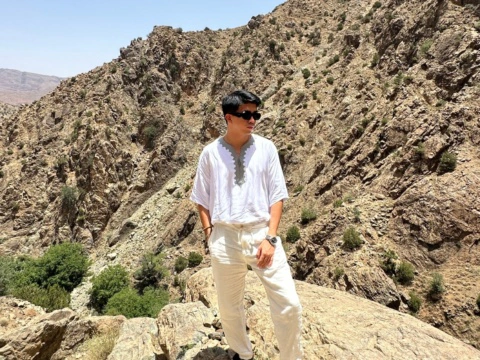
A day trip to Ourika Valley from Marrakech offers a glimpse into the traditional life of the Amazigh people.
The Amazigh people are one of the main ethnic and cultural groups that have shaped Morocco in North Africa. If you want to dig deeper into their culture, make a side trip to Ourika Valley, nestled in the foothills of the Atlas Mountains. The valley is home to flowing rivers, lush terraced landscapes, traditional Amazigh (Berber) villages, and the Setti Fatma waterfalls, all of which come together to offer a vivid window into mountain life.
Getting to Ourika Valley
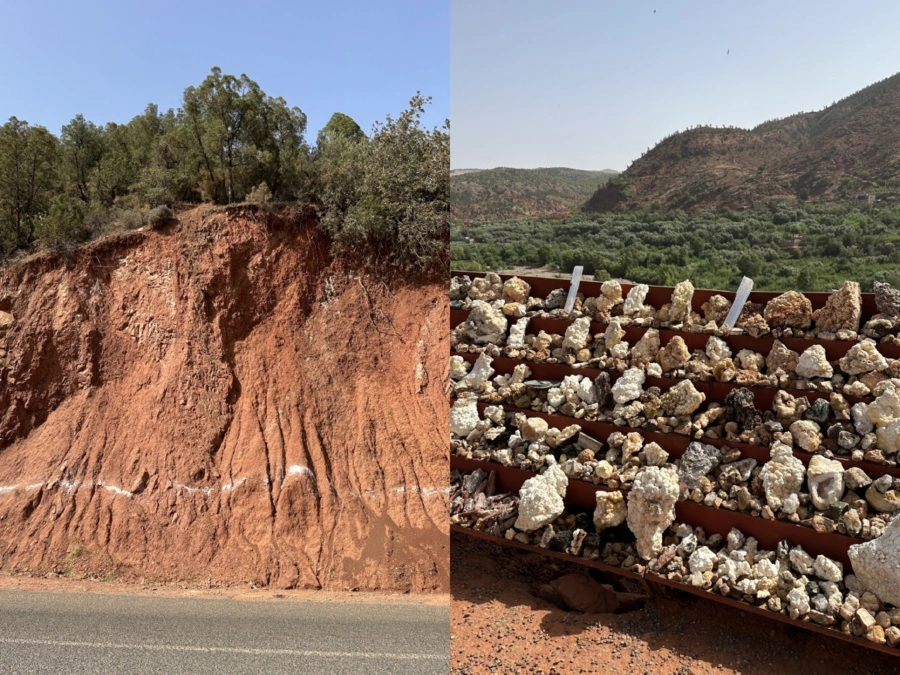
On the way to Ourika Valley. Photo: Lord Acuña
From our accommodation, my friend and I walked to the meeting point where we were picked up by the tour bus early in the morning. The journey from Marrakech to Ourika Valley is relatively short, although collecting other guests along the way took some time. As we travelled further, the scenery gradually changed. The earthy red terrain, coloured by iron-rich minerals in the soil and rock, created a dramatic contrast against the lush green valley. About an hour later, we arrived, and our first stop was an argan oil cooperative.
Mishkat Argan Cooperative
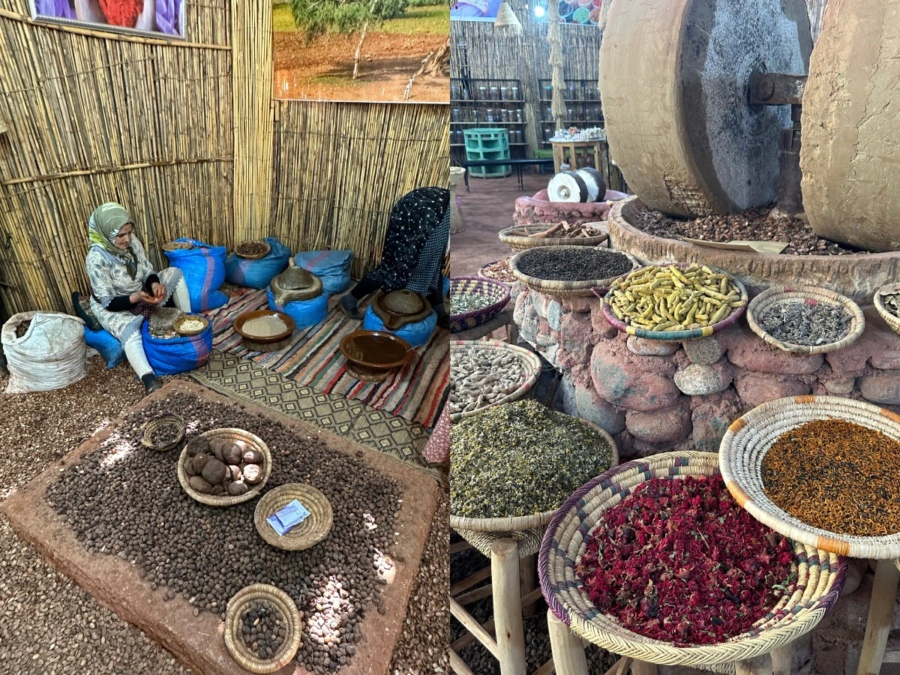
Stopped by a women-led argan oil cooperative. Photo: Lord Acuña
Before heading to a traditional Berber village, we stopped at Mishkat Argan, a women-led argan oil cooperative. Here, visitors can observe the labour-intensive process of cracking argan nuts and hand-grinding the kernels to produce both culinary and cosmetic oils. The cooperative also offers other natural Moroccan products, including olive oil and amlou, a signature almond-based paste.
Traditional Amazigh Village
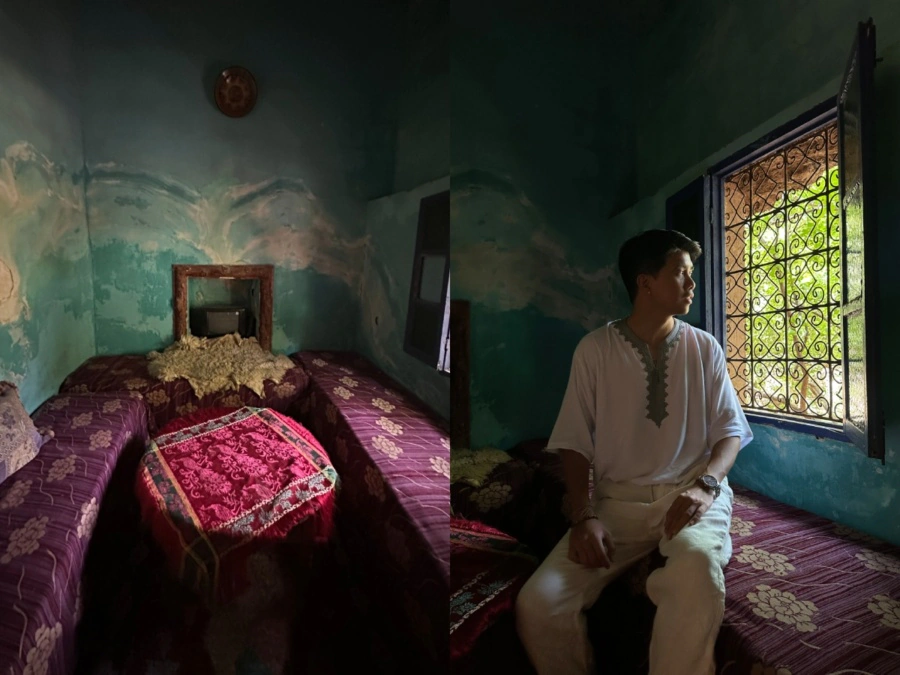
A look inside an Amazigh home. Photo: João Braga
A visit to an Amazigh village reveals how communities in the Atlas Mountains have lived for generations, shaped by customs and traditions passed down over time. As part of the tour, we entered a local home, offering a closer look at traditional Amazigh living spaces. Inside, the dwelling was simple yet functional, with spaces designed around family life and gatherings.
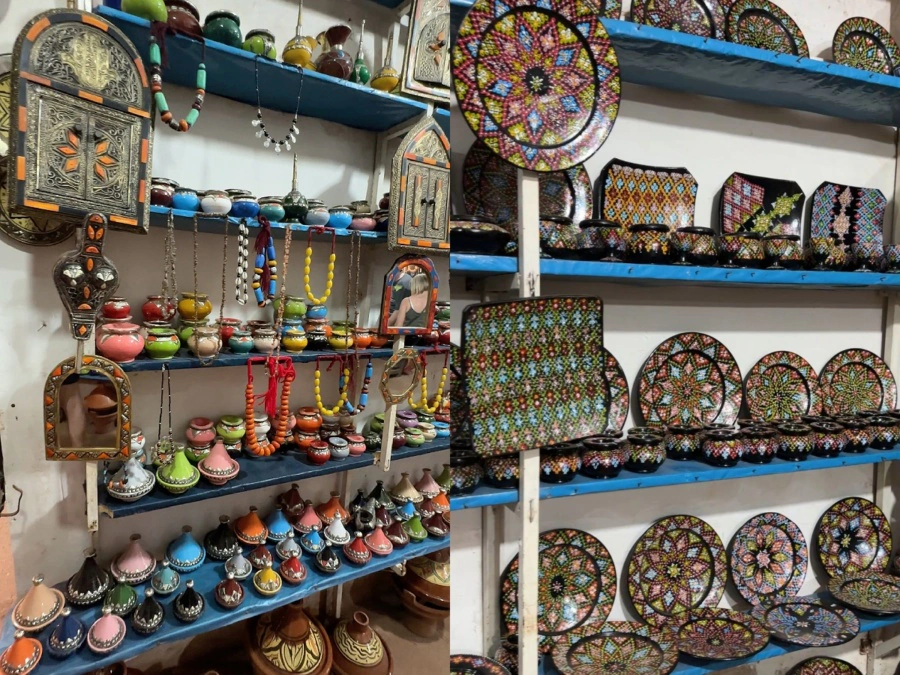
Beautiful souvenirs showcasing Moroccan craftsmanship. Photo: Lord Acuña
We also dropped by a local shop showcasing an array of handcrafted Moroccan goods. The store was filled with colourful displays of textiles, pottery, jewellery, and other artisan products. Beyond being a shopping stop, it highlighted the craftsmanship, skill, and creativity that continue to play an important role in Moroccan culture.
Setti Fatma Waterfalls
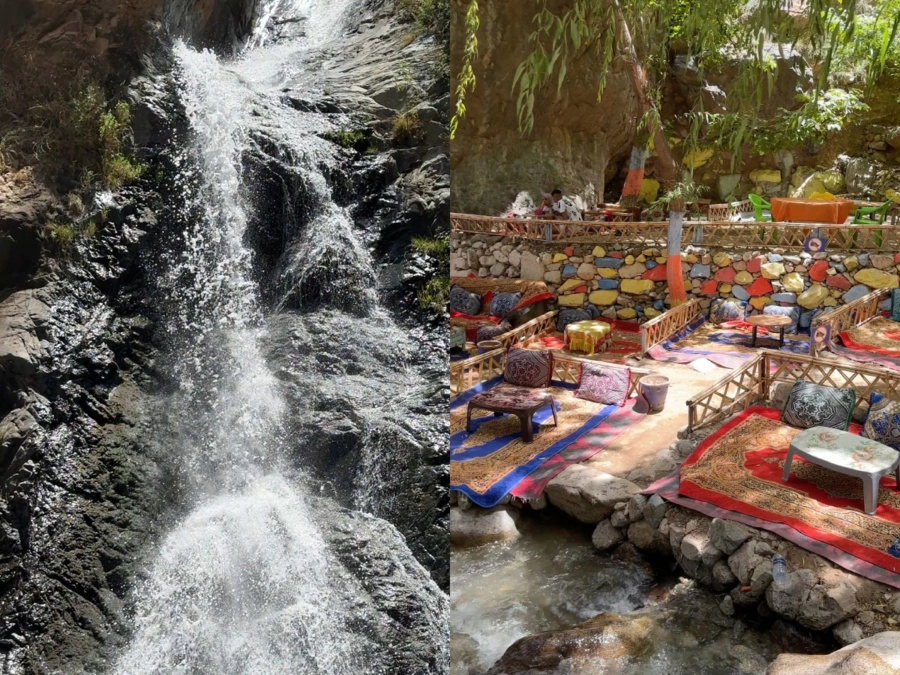
(L) The first waterfall at Setti Fatma. (R) A resting area for hikers. Photo: Lord Acuña
The next part is the highlight of the tour – the hike to the Setti Fatma waterfalls. Starting from the village, the trail led us into a narrow, rocky gorge carved by the rushing river. Small bridges, steep stepping stones, and uneven terrain quickly made it clear that this would be the most physically demanding part of the excursion.
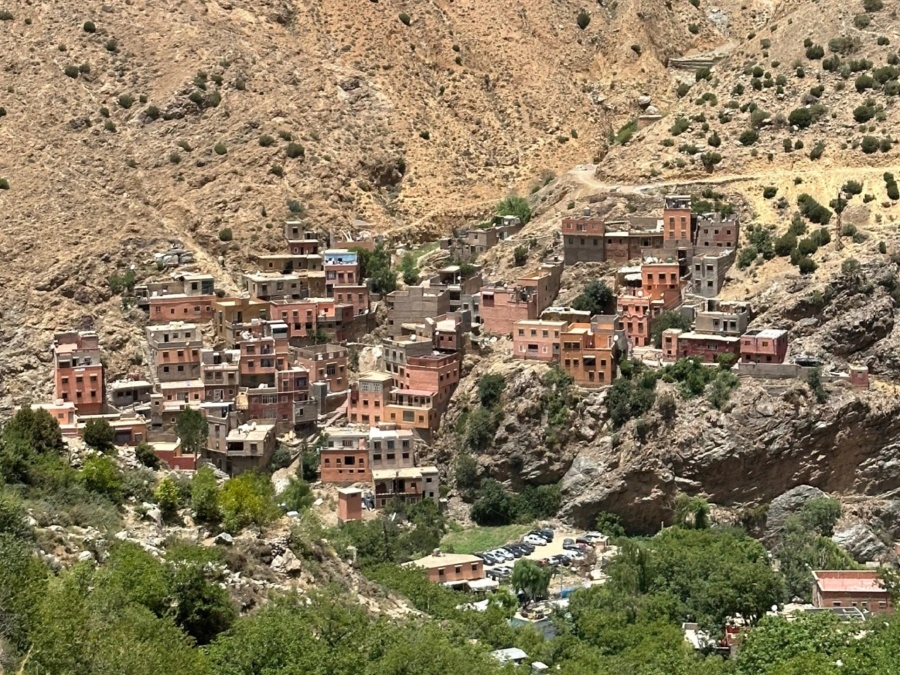
Spotted more Amazigh houses on our hike in the Atlas Mountains. Photo: Lord Acuña
The first waterfall is the most accessible and the one that most visitors reach. Beyond this point, the trail becomes noticeably steeper and more challenging, as hikers navigate less-defined paths. Higher up, the route becomes increasingly adventurous, rewarding those who continue with uninterrupted views of the surrounding mountains.
Ourika River
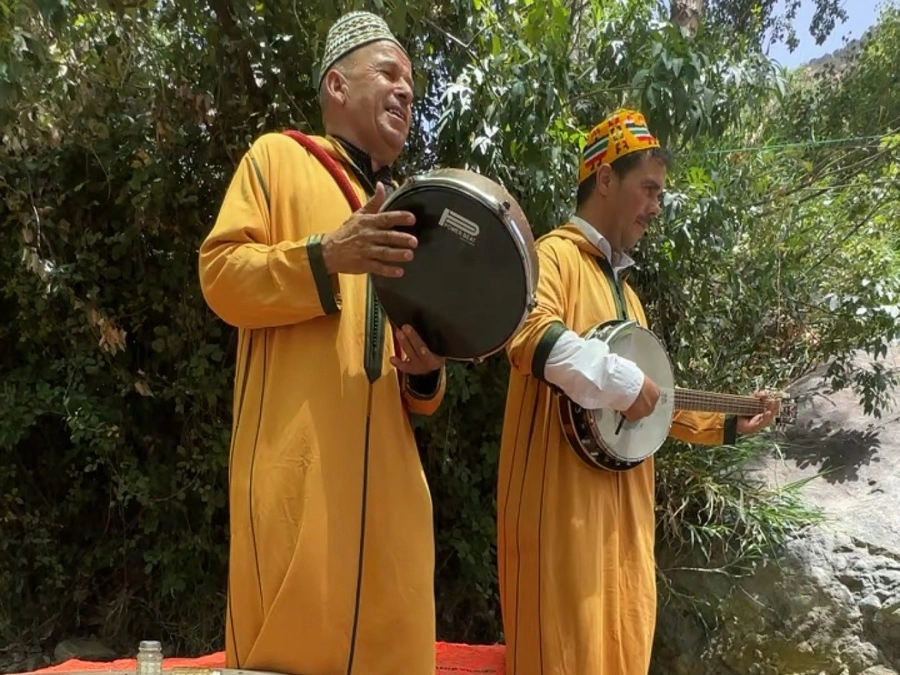
Being serenaded while eating in the middle of the Ourika river. Photo: Lord Acuña
As we made our way down, the sound of the river gradually grew louder, becoming a steady backdrop that guided us back towards the valley floor. Upon reaching the river, we enjoyed a leisurely lunch set right in the middle of the flowing water. Local musicians serenaded us as we ate, adding another cultural layer to the experience.
It was a short and sweet day in Ourika Valley, rounded off perfectly by a lunch in the river and live music before heading back to Marrakech!
Ourika Valley Tour
Duration: 7 hours
Cost: From MAD 130
Comments
Be the first to comment!